The short answer
Not always. A stain below a loft usually comes from a roof leak, condensation or a plumbing fault, and the cause decides who to call. Check the weather pattern, look for the stain's edge, go into the loft with a torch, and see whether pipes, tanks or a bathroom lie above. A roofer can settle it with a survey.
Roof, condensation or plumbing
A ceiling stain is a symptom, and three causes account for most of them. A roof leak is water entering through the covering or around a flashing, valley or chimney. Condensation is damp household air depositing water on a cold surface. A plumbing leak is a pipe, tank, radiator or bath releasing water above or beside the ceiling.
Each has its own character. A roof leak follows rain, often with a delay, and the stain may grow after a downpour and dry in fine weather. It frequently has a defined edge or tide mark. Condensation follows cold, still, humid days, spreads over wider areas and tends to speckle with mould. A plumbing leak ignores the weather, can run constantly or only when a tap, shower or heating comes on, and may smell of damp or show warm water.
The location offers a clue. A stain under a bathroom, a tank or a radiator points to plumbing. A stain on an outer wall near the eaves, or beneath a valley, chimney or roof window, points to the roof. A stain in a cold corner of a bedroom with no pipes nearby suggests condensation.
If you are unsure, do not assume. Our page on roof leak or condensation compares those two in more detail.
Where to look in the loft
The loft usually holds the answer. With a good torch, and standing only on boards or joists, inspect the space above the stain. Do not step on the ceiling between the joists, since plasterboard cannot take your weight.
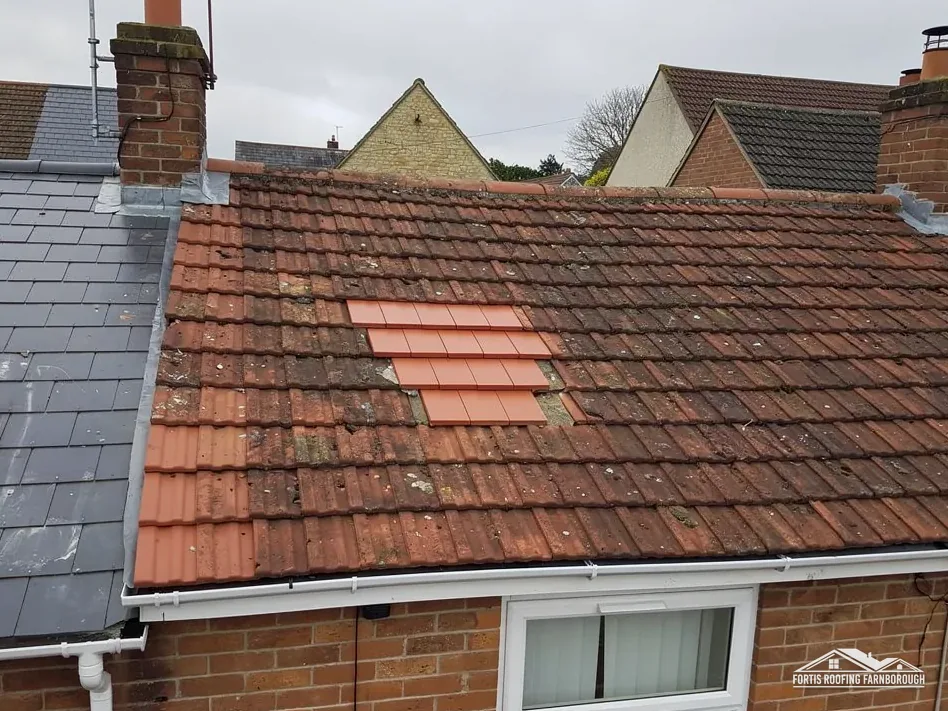
If the roof is the source, expect a dark streak along a rafter or batten, wet insulation under one spot, damp felt or a chink of daylight through the covering. Trace the water uphill; the entry point seldom sits straight above the stain and can lie well up the slope.
If plumbing is the source, you may see a dripping joint, a wet pipe, a damp tank or insulation that is soaked in a patch with no roof damage above it. Check overflow pipes too, since a tank that overflows can stain the ceiling directly below.
If condensation is the cause, expect beads of water and speckled mould over a wide patch of the roof's inner face, damp insulation at the eaves and nail points that look wet. Blocked eaves vents or a poor seal around the loft hatch are common contributors.
Photograph what you find, with the date, and keep the images for the roofer or plumber.
What to do about the stain
First, deal with any water that is present. Put a bucket beneath a drip and move belongings. A ceiling that is bulging with trapped water is dangerous, so keep clear of it, and if it is near a light fitting, read our page on a roof leak near a light fitting before you touch anything.
Second, identify the cause before you repair the ceiling. Painting over a stain hides the evidence and the damp returns through the new coat. If the stain is dry and old, mark its edge with a pencil and the date, then check whether it grows after rain.
Third, call the right trade. A roof leak needs a roofer, a plumbing leak needs a plumber, and condensation is cured by improving ventilation and moisture control, which a roofer or ventilation specialist can advise on. A roofer who surveys the roof and loft can tell you which of these you have, and if the cause is not the roof, say so.
Fourth, let the area dry fully. Plasterboard that stayed saturated for weeks may need replacing, and soaked insulation is renewed.
Once the source is fixed, redecorate. The roof repairs hub covers our work on leaks.
How a roofer settles it
Our survey takes in the roof's exterior and the loft above the stain. We trace the stain uphill, check the covering, flashings, valleys, ridge, gutters and chimney junctions above it, and look at the loft for signs of roof damage, condensation or pipes.
We photograph what we find and measure the affected area, then explain in plain language whether the roof is at fault. If it is, the repair is targeted at the source. If it is condensation, we say how the ventilation could be improved. If the evidence points to plumbing, we tell you so, and you can call a plumber with a clear idea of where to look.
You receive one written total for any roof work. We do not push a repair or a re-roof where the roof is sound, because paying for a roof repair that was never the problem helps nobody.
If there is a chance the leak is covered by insurance, keep your photographs and notes, and read our page on whether a roof leak is covered by home insurance.
Where the stain is new and wet, do not wait for it to grow. Water damage spreads quietly through insulation and timber, and an early look keeps the repair small.