The short answer
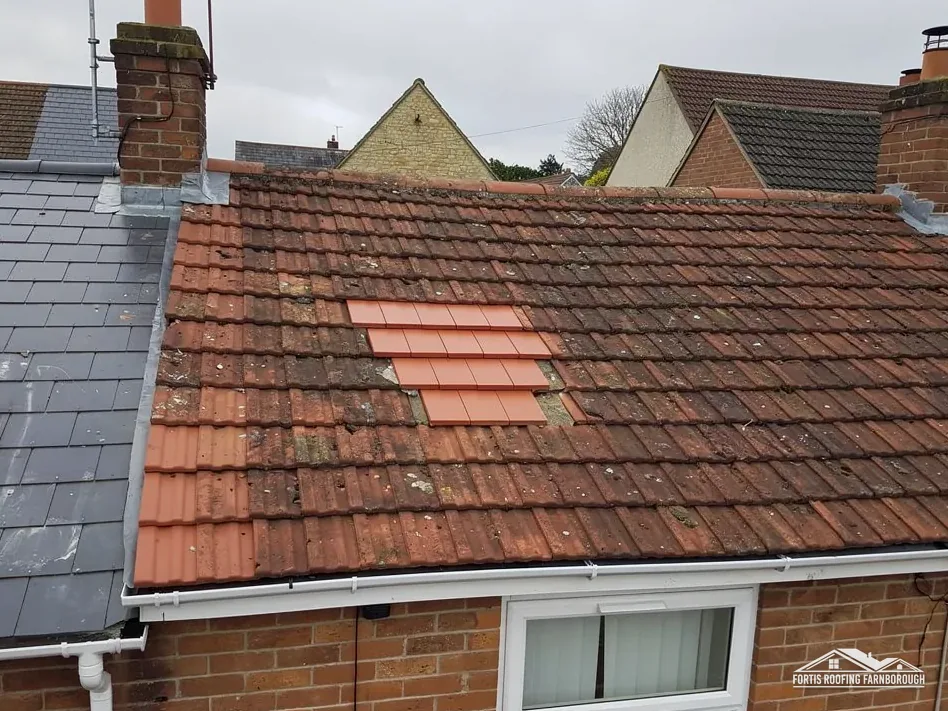
Call straight away when the roof puts people or the structure at risk: water near wiring or lights, a hole open to the weather, a sagging ceiling, a tree or chimney that has come down, or debris about to fall. A slow drip, a single slipped tile or a stain that has not grown can usually wait for a booked survey. We offer no response time, only a make-safe first.
Problems that cannot wait
Some faults put people in danger or let damage run away quickly. Water coming through a ceiling near a light fitting, a socket or any wiring is the clearest case, because water and mains power together can kill. Cut the supply to that circuit if the fuse box is dry to reach, keep clear and ring an electrician as well as a roofer.
A hole open to the weather is next. If a storm has taken off a section of covering or a tree has gone through, rain and wind will keep coming in until it is covered, and wet insulation and timber begin to suffer within hours.
A ceiling that is bulging, sagging or cracking under the weight of trapped water is a collapse risk. Keep people out of that room altogether. The same goes for a roof that has visibly dropped, a ridge that has moved or rafters that have split.
Debris that could fall is another. Loose tiles on an edge above a path or door, a chimney pot leaning over, a gutter hanging from one bracket or a loosened section of scaffold-free roofline are hazards to people below, and the area should be kept clear until a roofer has dealt with them.
Any one of these justifies an urgent call, even outside normal hours.
Problems that can wait for a survey
Many faults are worth fixing soon but not at once. A slow drip that fills a cup overnight can be caught in a bucket while you book a survey. A single slipped or cracked tile with no water coming in is a quick repair, and a stain that has not changed in weeks is a clue to follow up and not an emergency.
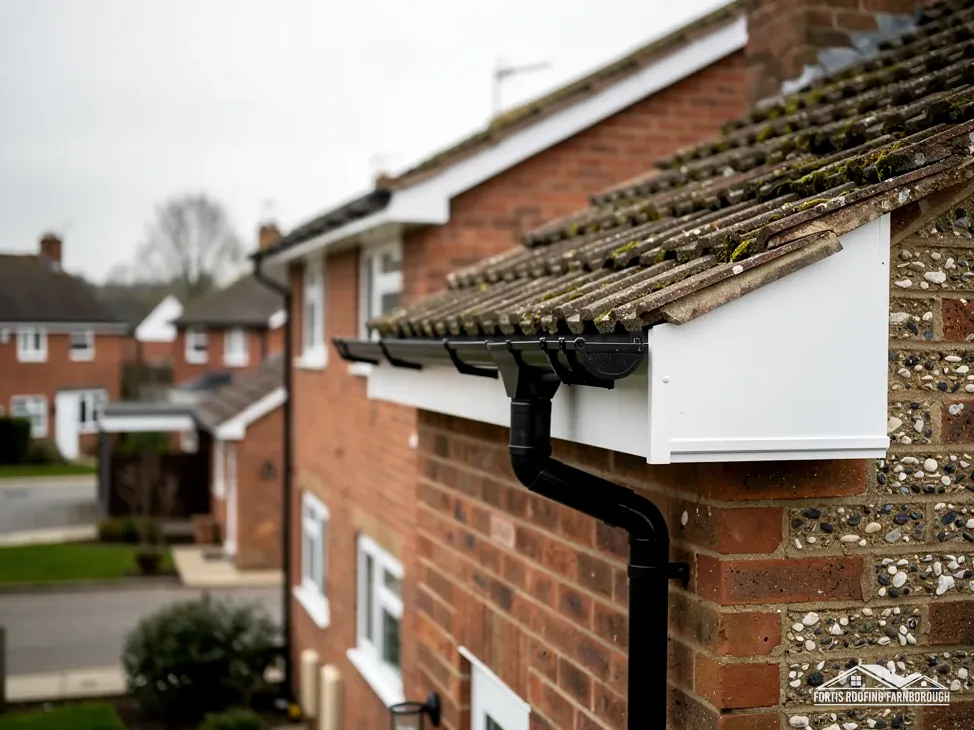
Overflowing gutters, a loose section of fascia or soffit, moss and lichen, a flaking chimney pointing or a dripping valley in light rain all deserve attention, but a booked visit in the coming days is normally enough. Delay does cost something, because water that gets in can spread through insulation and timber, so do not leave them for months.
The test is simple. Is anyone at risk, is water entering in volume, or is the structure moving? If the answer to all three is no, arrange a survey, protect what is below the damaged spot and keep an eye on it.
When you are unsure, ring and describe the situation. A roofer who hears that a few tiles have slipped and the loft is dry will tell you it can wait, and one who hears about a sagging ceiling will come out to make it safe.
Our page on signs of a roof leak in the loft helps you judge how serious a stain is.
What to do while you wait
Stay out of danger and limit the damage from the inside. Move people and pets from any room with a sagging ceiling. Put buckets under drips, lay towels around them and shift furniture and electronics away from the wet area. Puncturing a bulging ceiling to let water out is a job for a professional, because the plasterboard can come down with it.
Stay off the roof, and off a ladder in wet or windy weather. A roofer secures sheeting properly, and our page on putting a tarpaulin on a damaged roof explains why this is not a job for an owner.
Where a storm is to blame, contact your insurer before repairs and take pictures from somewhere safe. The Financial Ombudsman Service says insurers look at whether storm conditions caused the damage, and good records help. The FOS helpline is 0800 023 4567 if you later need to complain.
Jot down what you notice, with times and the weather, and hold on to receipts for anything bought to protect the house. These notes become useful if the insurer asks for them or the roofer needs to understand how the damage developed.
If a gas smell, sparking or flooding is involved, leave the building and call the appropriate emergency service first.
What we do and what we do not promise
When you call about an emergency, we ask what has happened, where the water is getting in and whether anyone is at risk, and we tell you whether it needs urgent attention or can wait for a survey. Where it can be done sensibly, a temporary cover goes on before anything else.
No response time is on offer. The weather, access and the state of the roof decide when it is safe to go up, and a firm that quotes an exact hour is offering something it cannot control. What we do offer is a straight account of what can be done and when.
Lasting work comes after an assessment, with photographs of the roof and loft and a measured damaged area, quoted as one total in writing. Where scaffold is needed, the licence notice is part of the programme, as our page on how long a roof repair takes explains.
The roof repairs hub covers the full range of repair work.