Western brick and clay
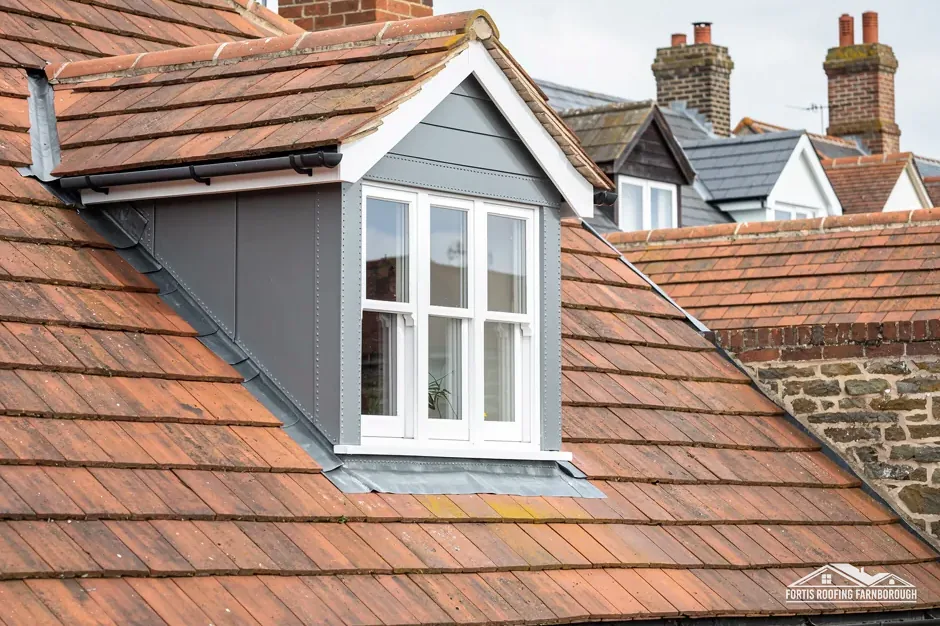
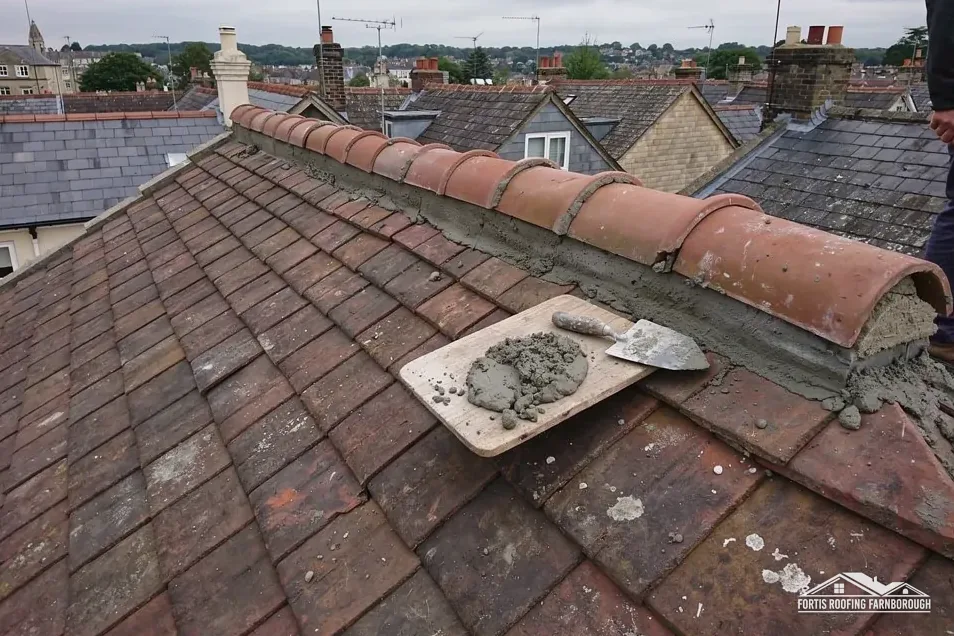
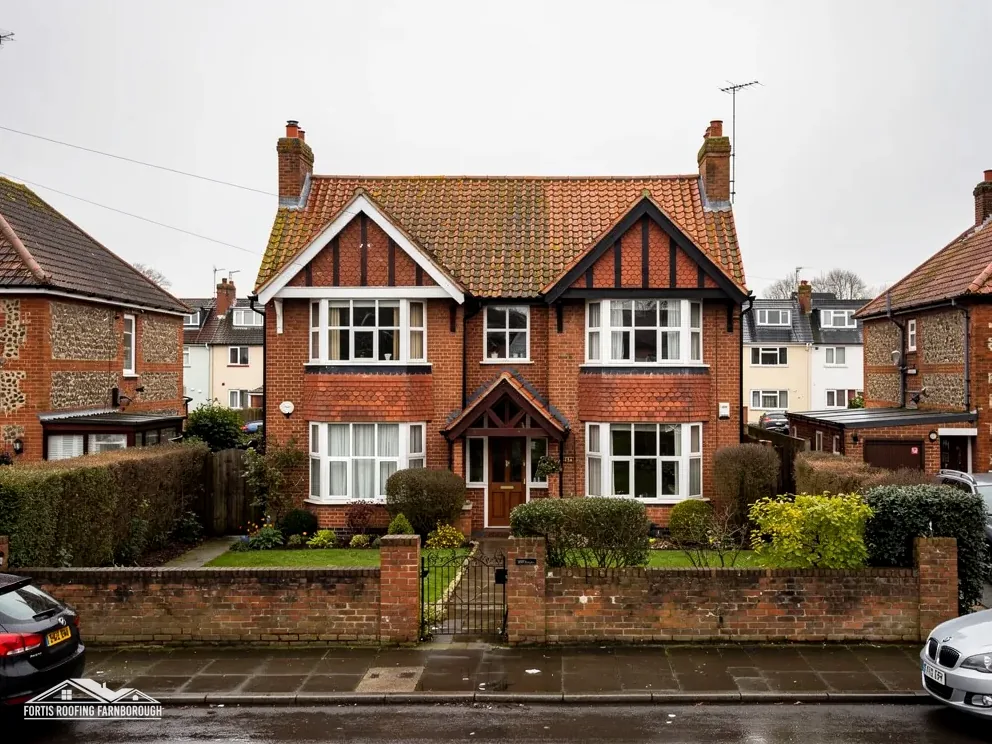
Bracknell Forest's appraisal says brick and clay tiles unify the larger houses at Church Street's western end.
Victorian streets that grew after Wellington College, the station and Broadmoor
Crowthorne grew from scattered dwellings once Wellington College, the station and Broadmoor arrived between 1859 and 1863. We survey its roofs slope by slope, then give one written price.
Bracknell Forest's appraisal says brick and clay tiles unify the larger houses at Church Street's western end.

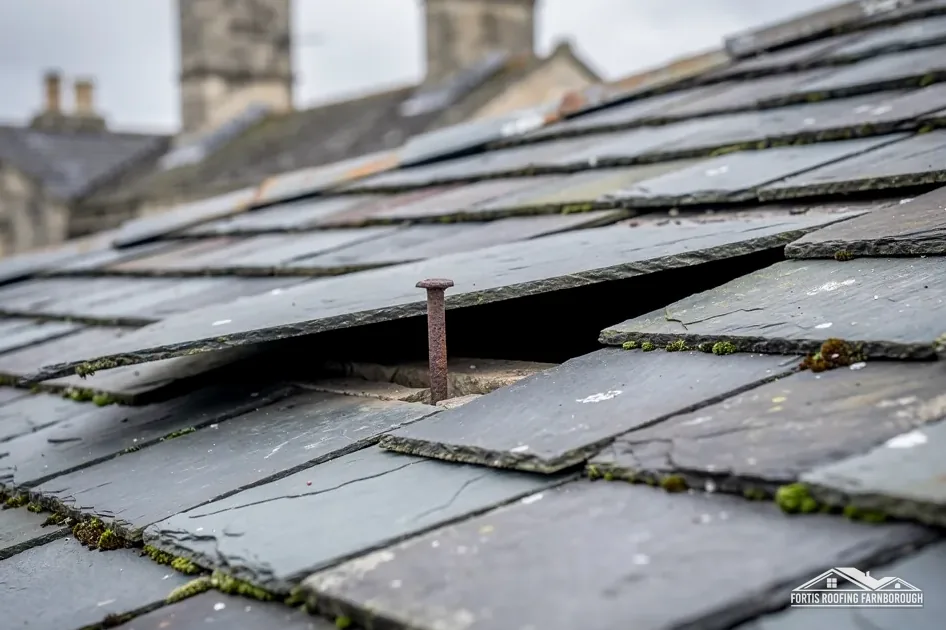
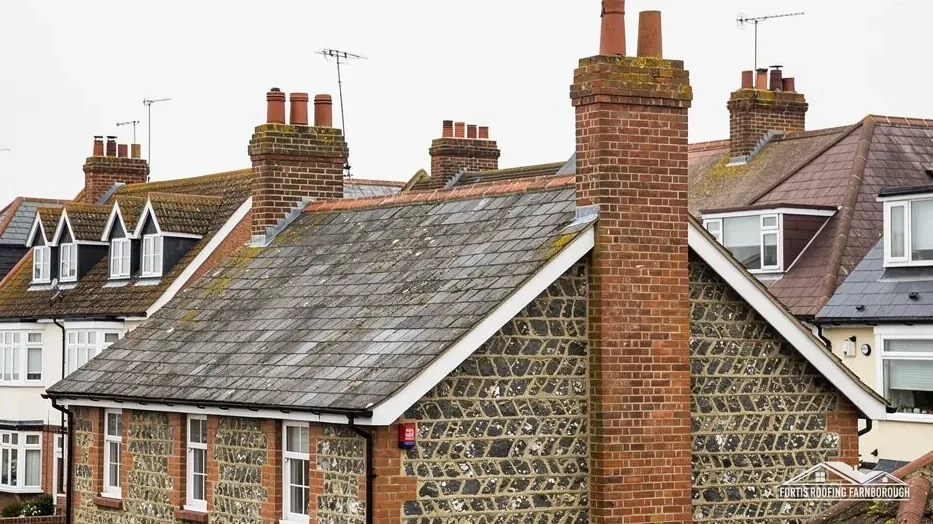
The same appraisal records slate on Church Street's mid-Victorian terraces and its eastern shops, with some tile-hanging.
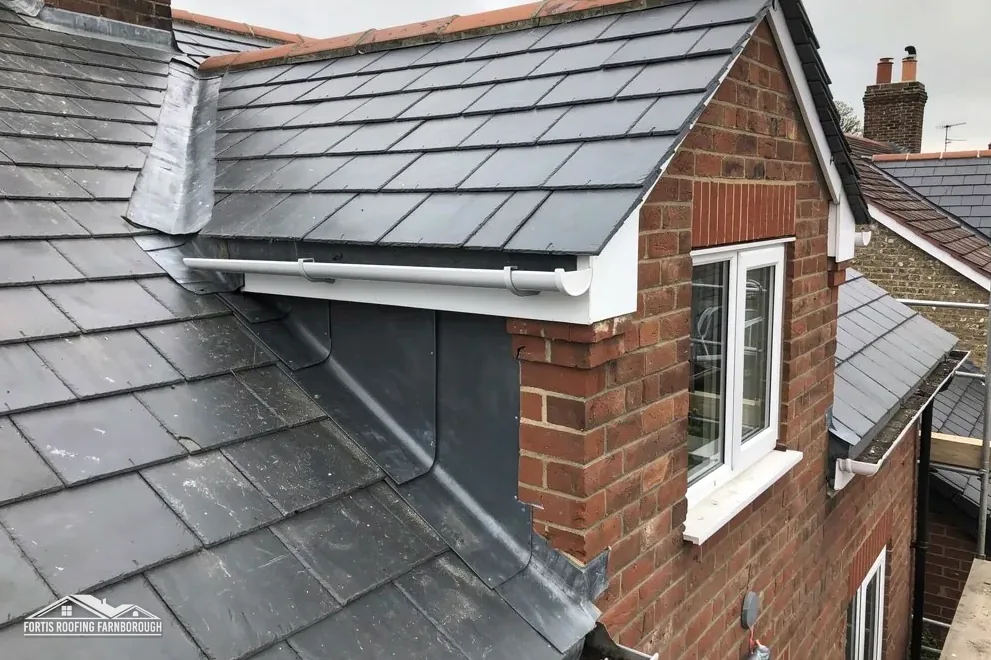
In 1923 the Victoria County History described east and west wings with mansard roofs of slate.
Map of Crowthorne with Owlsmoor, Sandhurst, Yateley, Finchampstead marked around it.
Map data © OpenStreetMap contributors. Loads only when you ask for it.
Owlsmoor, Sandhurst and Camberley lie to the south-east, Yateley to the south-west, Finchampstead to the west, and Blackwater and Hawley to the south.
About 8.8 road miles north of Farnborough · Bracknell Forest Council (unitary).
Crowthorne, brick, tile and slate
The councils behind a Crowthorne roof job, including a boundary worth checking, what Bracknell Forest's appraisal says about Church Street's brick and tile, and how conservation and listing records shape a repair.
| No. | Chapter | The figure it turns on |
|---|---|---|
| 01 | Bracknell Forest, and a boundary to check | Bracknell Forest regulates; check the boundary |
| 02 | A college, a station and a brickyard | Brickyard opened 1859 for the College |
| 03 | Church Street's conservation area and listings | Church Street, within about 0.75 km |
Chapter 01 of 03
| Role | Body for Crowthorne addresses |
|---|---|
| Planning authority (unitary) | Bracknell Forest Council |
| Highway authority | Bracknell Forest Council |
| Building control | Bracknell Forest Council, its own service |
| Scaffold licence on the highway | Bracknell Forest Council, covering 6 weeks |
Crowthorne sits 8.8 road miles north of Farnborough on the A325 Farnborough Road measure. As a unitary authority, Bracknell Forest Council deals with planning, highways and building control itself. One detail needs care: the built-up area crosses the boundary into Wokingham borough, with Wokingham Without parish to the south-west of the village centre, so the first question for a house on that side is which council it belongs to.
Bracknell Forest Council's own page counts a new covering on a pitched or flat roof among the works that can require Building Regulations approval, so we check at the survey instead of assuming. For small jobs the national yardstick still frames the conversation: the Planning Portal puts the line at 25 per cent of the building envelope and 50 per cent of the roof. A covering heavier by 15 per cent or more brings in Building Regulations approval anyway.
Our survey records the existing covering, measures every slope and puts the answer on paper, with photographs. A job such as a full roof replacement is planned around that answer from the first day, and any inspections are booked before work starts.
The village sits among pinewoods, and needles and cones collect in gutters and valleys wherever trees overhang a roof. A blocked outlet sends water over the eaves instead of down the pipe, so the survey notes which gutters sit beneath trees, and the report says how often they are likely to need clearing.
Corner plots and houses with rear wings often have more roof faces than the street shows. We check every face from the ground and from the access we set up, so that no slope is judged from a distance alone.
Bracknell Forest's residential scaffold licence costs £350, which includes a non-refundable £100 application fee, and it covers a period of 6 weeks, after which a new licence is needed. Bracknell's page adds that a scaffold kept to private ground requires no licence. Its page sets £700 where scaffolding goes up unlicensed, so we have the licence in place before work starts. Bracknell's page does not name an applicant either, so the scaffolder is asked at the survey.
For an address on the Wokingham side of the boundary the rules change. Wokingham Borough Council places the application with the scaffold company, acting for its client, charges £263 for the first 4 weeks and £163 for each 4 weeks after, and wants at least 10 working days' notice. We confirm the council first and plan the scaffold around its terms.
Chapter 02 of 03
Crowthorne's growth in dates and residents
Bracknell Forest's appraisal of the Church Street conservation area explains how Crowthorne took shape. It grew from scattered dwellings after Wellington College in 1859, Crowthorne station in 1860 and Broadmoor Hospital in 1863, with speculative building around Waterloo Road and the High Street. The 2021 Census counted 7,810 usual residents in the parish.
Many Crowthorne buildings used local bricks. Thomas Lawrence and Sons opened a brickyard and kiln at Crowthorne in 1859 to serve Wellington College. In the Church Street area the appraisal describes the larger western houses as unified by brick and clay tile, with polychromatic banding and some tile-hanging on gables and upper floors, while the mid-Victorian terraces and many buildings at the eastern end carry slate. Polychromatic banding means bands of different coloured brick laid across a wall, and tile-hanging means clay tiles fixed vertically as a wall covering.
That mix puts several junctions in play on a single house: roof tiles meeting hung tiles, slate meeting brick, and lead flashings between them, each of them a place where water looks for a way in. We check each junction on the survey, photograph what is behind the covering, and name the material on every slope before a repair is recommended. Our slate roofing page explains how the slate roofs are surveyed.
Speculative building means a builder put up houses on spec, and where one builder put up a row, the same detail can recur from house to house. A flashing failure found on one roof is therefore worth checking on the next, and the photographs make that conversation with a neighbour easy.
Tile-hanging also shows how local brick and clay mixed on a single wall: a brick lower storey, hung tiles above and a tiled roof over them. Each material has its own life and its own way of failing, and the survey assesses them separately instead of treating the house as one surface.

In 1923 the Victoria County History described Wellington College as red and purple brick with stone dressings, its east and west wings having mansard roofs of slate. On a mansard, each face breaks into a steep lower pitch and a shallower upper pitch. The description is a record of how slate has long been part of the Crowthorne roofline, though it tells you nothing about the roof over your own house, which is why the survey looks.
Chapter 03 of 03
| Check | In Crowthorne | For roof work |
|---|---|---|
| Conservation area | Church Street Crowthorne, within about 0.75 km | Ask Bracknell Forest before changing a roof's look |
| Council wording | Bracknell Forest lists 6 conservation areas | Crowthorne is one; check your address |
| Listed building | Checked on the National Heritage List by address | Listed building consent for work affecting character |
| Article 4 direction | Checked by address with Bracknell Forest | Shows whether a roof right has been withdrawn |
Bracknell Forest Council says there are 6 conservation areas in the borough, and Church Street Crowthorne is the one that lies within about 0.75 km of the village centre. The appraisal that describes it is the document to read before any change that would alter how a Church Street roof looks from the road.
A conservation area does not forbid maintenance; the question is whether the look of the building changes. Putting back the same clay tiles, ridge and verge leaves it as it was, and the council has nothing to approve. Replacing clay with a different material, or taking a stack down, changes it, and for those we put the plan to Bracknell Forest's planning team before pricing. We keep photographs of the original so a comparison can be made at any point.
On a house with tile-hanging, the hung tiles are part of the look as much as the roof is. Renewing them to match, with the same size and colour, is maintenance; covering them over or replacing them with boards would not be, and the council would be asked first. Where hung tiles meet the roof, the lead flashing between them is checked for lift and cracking, since that is where water gets behind the hanging.
The National Heritage List shows one listed building within 500 m of the village point, and any listing is checked by address before a price is given. Bracknell Forest publishes a list of Article 4 directions; whether one reaches your house is a question for the council, and we ask it. Listed building consent covers work that changes a listed building's character, so a listed roof is repaired with matched materials and reused tiles where they are sound.
Whatever the checks show, the site routine does not change: the site is left clear at the close of each day, and you are told what the next day holds. Our chimney repairs page explains what we look at on a stack before any change to it is discussed.
A consent step therefore never turns up as a surprise on the bill, because the price in writing follows the survey and these checks.
We start at the junctions, because that is where water gets in, and we do not stop there. Each one is opened enough to photograph the lead, battens and fixings, and the material on every slope is named. The repair then follows the evidence: sound clay or slate stays where it is working, and failed flashings or fixings are replaced.
Not when a repair puts back the same clay tiles, ridge and verge, because the look from the road is unchanged. A different covering, a taken-down stack or an altered ridge does change it, and then Bracknell Forest's planning team is asked first. Any Article 4 direction touching your address is looked up before we price.
Bracknell Forest Council's page treats the replacement of a pitched or flat roof covering as something that may need Building Regulations approval, so we check before a re-roof. A few replaced tiles sit inside the Planning Portal's test of under 25 per cent of the building envelope and 50 per cent of the roof.
Wokingham Borough Council licenses scaffold on its own roads, puts the application on the scaffold firm, and charges £263 for the first 4 weeks and £163 for each 4 weeks after. Bracknell Forest's residential licence is £350 for 6 weeks. We confirm which council covers your address before the survey ends.
Get your free roof quote
Tell us the road and the problem you can see, and we will book a visit.
10-year workmanship guarantee, in writing.