Handmade clay tiles
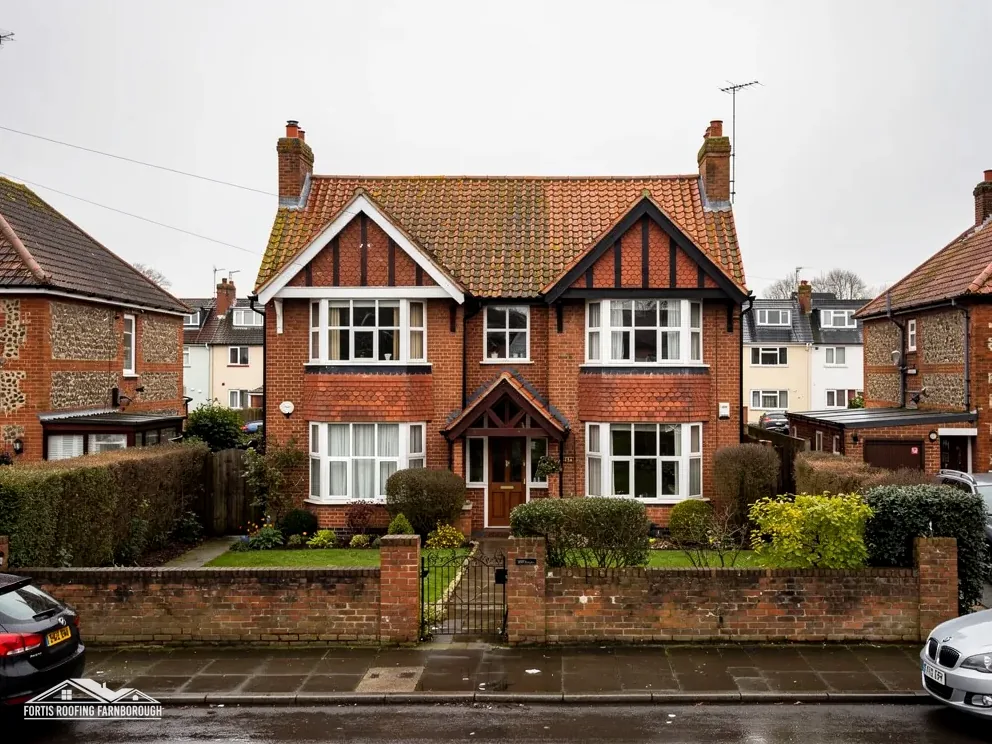
Handmade clay tiles were the village's preferred roofing material until grey Welsh slate began arriving by railway.
Handmade clay tile, Welsh slate and the village's five greens
Five greens shape Hartley Wintney. Handmade clay tile gave way to grey Welsh slate after the 1850s, and each roof is surveyed on the evidence before it is priced once.
Handmade clay tiles were the village's preferred roofing material until grey Welsh slate began arriving by railway.
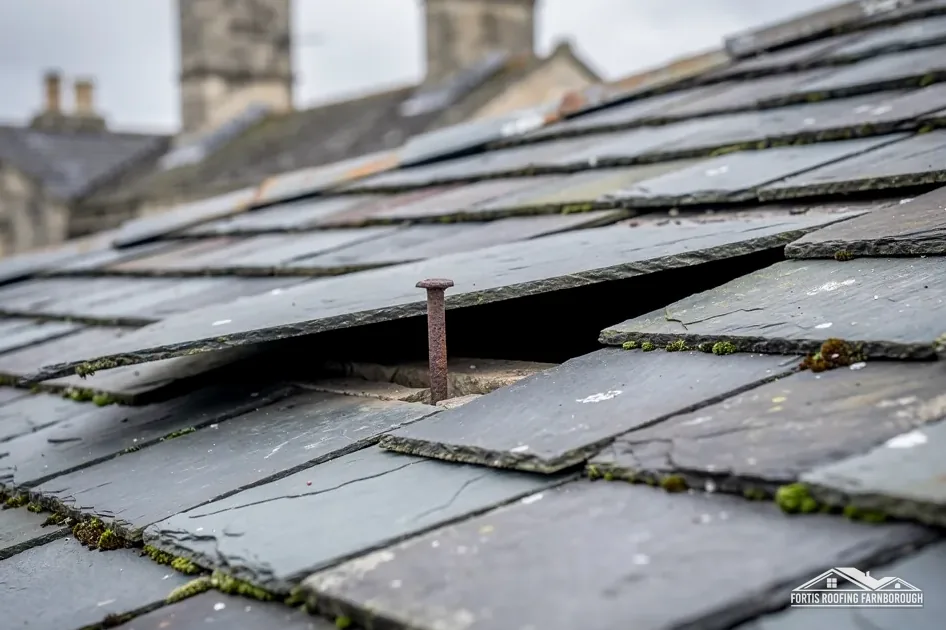
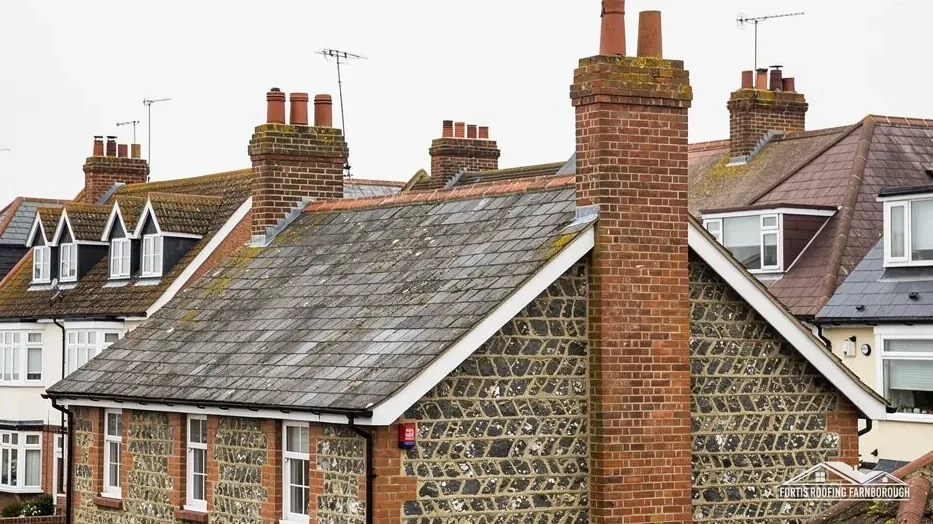
Hart's appraisal notes that many unlisted positive buildings have shallower-pitched slate roofs rather than handmade clay tiles.
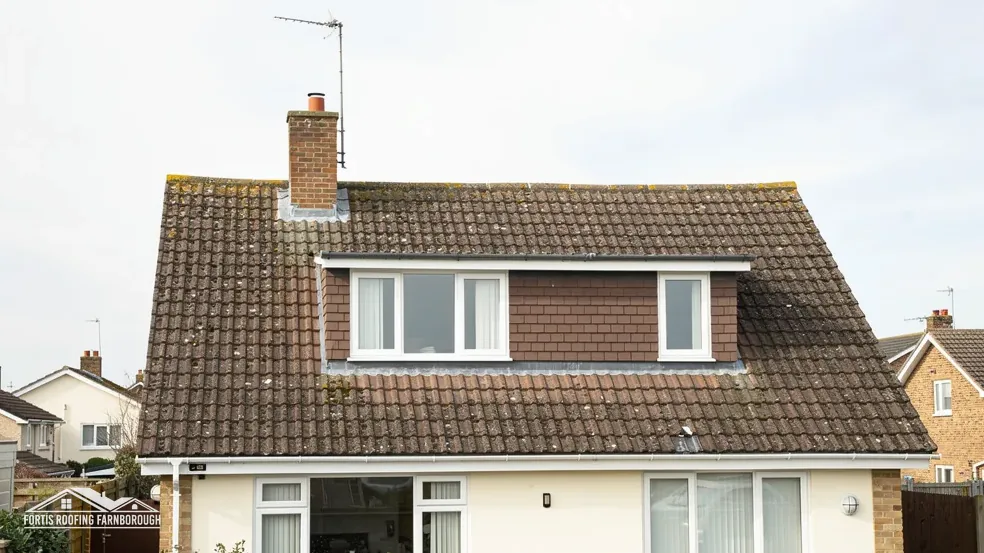
The conservation area, designated in 1970, covers most of the village and its five greens.
Map of Hartley Wintney with Elvetham Heath, Hook, Fleet, Crookham Village marked around it.
Map data © OpenStreetMap contributors. Loads only when you ask for it.
Hook lies to the south-west, Fleet and Elvetham Heath to the south-east, Eversley to the north, and Yateley to the north-east.
About 9 road miles west of Farnborough · Hart District Council and Hampshire County Council.
Hartley Wintney, five greens, two coverings
Which councils regulate a Hartley Wintney roof, how Hart's appraisal describes its tile and slate, and what the 1998 direction, the listings and the Baptist church mean for repairs, with sources for every figure.

| No. | Chapter | The figure it turns on |
|---|---|---|
| 01 | Hart, Hampshire and Rushmoor on one roof job | Hart plans; Rushmoor's team inspects |
| 02 | Welsh slate follows the railway to the greens | Slate arrives after the 1850s |
| 03 | The 1998 direction and a Baptist church | 22 listed buildings within 500 m |
Chapter 01 of 03
| Role | Body for Hartley Wintney addresses |
|---|---|
| Planning authority | Hart District Council |
| County council and highway authority | Hampshire County Council |
| Building control | Hart and Rushmoor Building Control Partnership |
| Scaffold licence on the highway | Hampshire County Council; scaffold firm applies |
Hartley Wintney is 9 road miles from Farnborough, to the west, with the A325 Farnborough Road as the starting point for that figure. A roof job there passes through two councils. Hart District Council deals with planning, and Hampshire County Council looks after the A30 and the village's other roads and pavements. A third council sits behind the scenes: Hart's own pages say its building control comes from Rushmoor's team in Farnborough, so the inspector for a Hartley Wintney re-roof travels out from Farnborough.
Re-roofing becomes a building control matter by size. The Planning Portal's guide says work affecting less than 25 per cent of the building envelope and less than 50 per cent of the roof can normally go ahead without an application, so a patch repair does not normally reach the partnership's team. A full re-cover goes further. If the replacement weighs 15 per cent or more above what comes off, Building Regulations approval is required regardless of area, with the Planning Portal advising an engineer's opinion first. When slate replaces clay, or the reverse, the survey weighs both coverings before you are quoted.
Hart and Rushmoor have shared building control since July 2015, so a Hartley Wintney application and a Farnborough one go to the same desk. A registered building control approver is the alternative if you prefer a private provider, and the survey explains the difference in plain terms. If you are weighing a repair against a re-cover, our roof replacement page walks through how we weigh the two.
Where a scaffold stands on a road or pavement, the licence comes from Hampshire County Council under section 169 of the Highways Act 1980. On Hampshire County Council's page the applicant is the scaffolding company. Hampshire County Council needs ten clear working days or more to pass once the application is in before a licence can start, charges £211.90 for the first 2 weeks and £72 for each further 2 weeks, and offers no extension once a licence is issued. The page also refers to scaffold built to BS EN 12810 and BS EN 12811. A scaffold that stays inside your property needs none.
A frontage beside one of the greens can leave little room for poles and deliveries, so the survey agrees the scaffold position, the skip and the ladder access with the scaffolders before dates are fixed. A daily note tells you where the job stands.
Chapter 02 of 03
Figures behind the five greens
Hart's appraisal describes a village where handmade clay tiles were the preferred roofing material until grey Welsh slate began arriving by railway after the 1850s. The conservation area was designated in 1970 and now covers most of the village and its five greens, though not the large 20th-century housing areas to the north-west and south-east. About 50 listed buildings or structures stand inside it. The 2021 Census counted 5,925 usual residents in the parish.
The appraisal adds that many of the village's unlisted positive buildings have shallower-pitched slate roofs rather than handmade clay tiles. That difference shows in the roof's structure. Marley gives minimum pitches of 30 to 40 degrees for several of its clay plain tiles, while BS 5534 indicates 20 degrees as the minimum for natural slate. Low-pitched slate and steep handmade clay are built to different rules, and the survey measures the pitch of each slope before any covering is recommended.
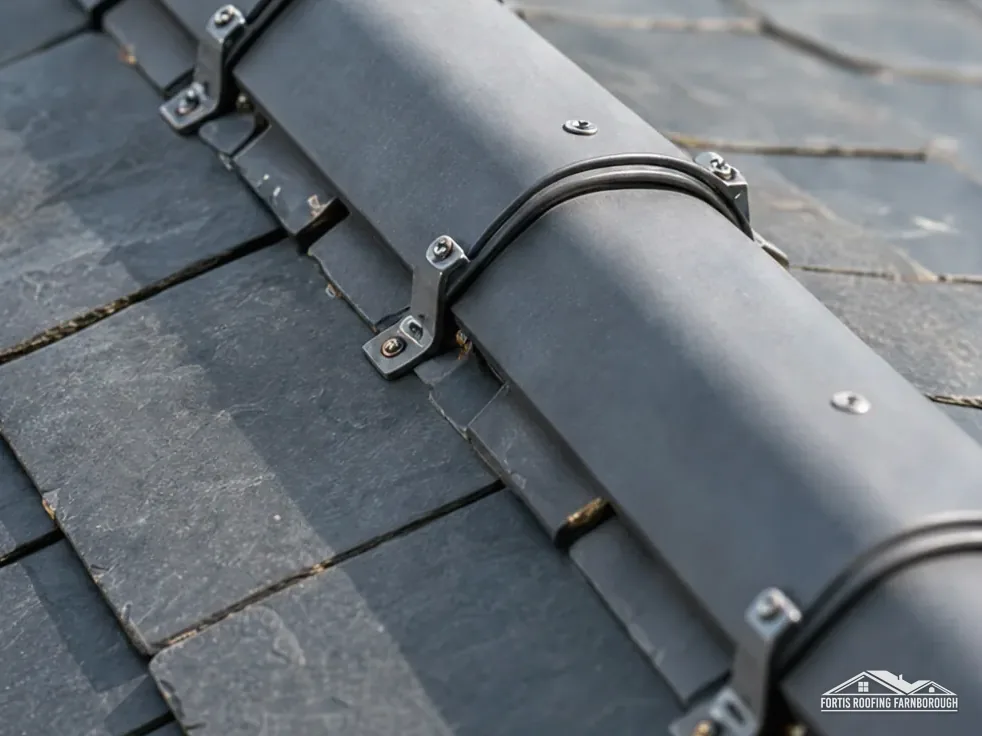
A roof of handmade clay gets a different check from a slate one. On the clay we look for cracked and flaking tiles; on the slate, for slipped slates and tired fixings. Where slates have slipped, the cause is often a failed fixing rather than a failed slate, and our slate roofing page explains how that is judged.
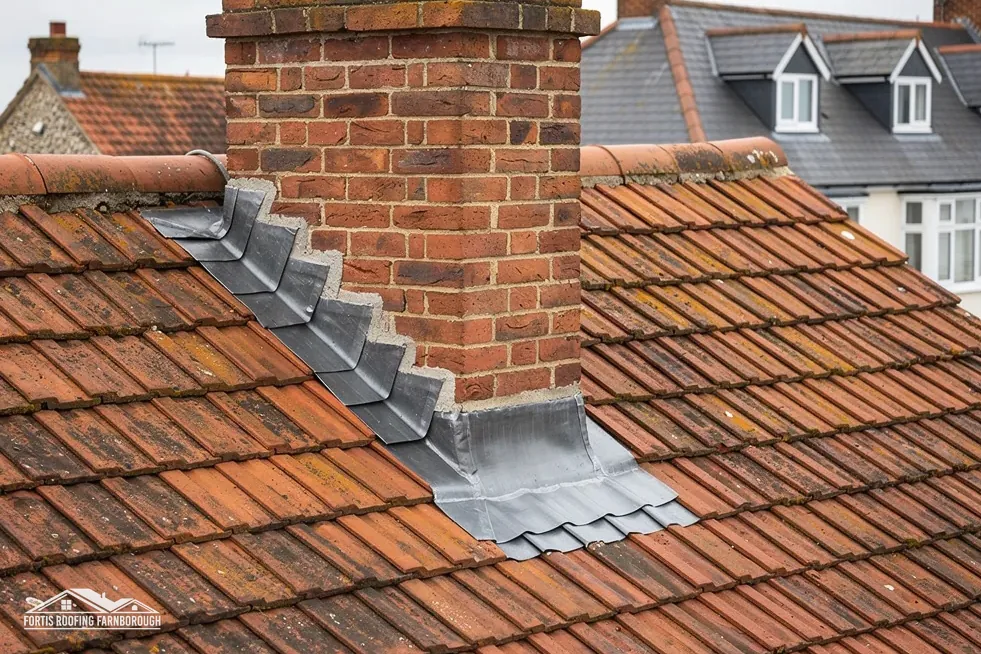
An extension in one covering joined to a main roof in the other puts a junction in the middle of the roof, and a junction is where water gets in first. The lead flashing, the verge and the valley there are lifted for inspection, photographed and recorded before a repair is priced. Lead flashing, MyJobQuote says, "can last for over 80 years", which is a floor rather than a guarantee, and an old flashing still in good order can be kept while tiles or slates around it are renewed.
Pitch minimums
The photographs go in your report, with the pitch noted for each slope and the covering named. That record is what makes a written price possible, because it shows what we found where, and why a repair of one slope may differ from a repair of the next. A shallower pitch sheds water more slowly, so on slate roofs of that kind the overlaps, the fixings and the gutters matter more.
Chapter 03 of 03
| Designation | In Hartley Wintney | For roof work |
|---|---|---|
| Conservation area (1970) | Hartley Wintney, the village and its greens | Ask Hart before changing a roof's look |
| Article 4 directions (1998) | Hartley Wintney and Church House Farm areas | Frontage roof slopes and chimneys on dwellings |
| Article 4 direction (1985) | Land at Warren Hill Farm | Named on Hart's list; check by address |
| Grade II listed | Baptist Church (NHLE 1339855) | Route depends on denomination and use |
| Grade II listed | Porter Antiques building (NHLE 1092299) | Listed building consent for work affecting character |
The National Heritage List names 22 entries inside a 500 m radius of the village point. Among them are the Baptist Church (NHLE 1339855) and the building listed as Porter Antiques (NHLE 1092299), each Grade II since 26 June 1987. A barn and a cartshed at Causeway Farm are Grade II as well (NHLE 1116595 and 1092294), a reminder that farm buildings are part of the village's listed stock.
Hart's appraisal also identifies unlisted positive buildings, those that add to the character of the area, so even a house that is not listed can be one where the council cares how the roof looks.
Hart applied Article 4 directions to most of its conservation areas in 1998, and the list includes both the Hartley Wintney area and the Church House Farm area. They cover alterations to a dwelling's frontage, with roof slopes facing the road named explicitly, and any building, altering or removal of a chimney. A 1985 direction at Warren Hill Farm is also on Hart's list. On a house facing one of the greens, altering the street-side slope or the chimney therefore means talking to Hart before work starts, with our photographs and measurements to hand.
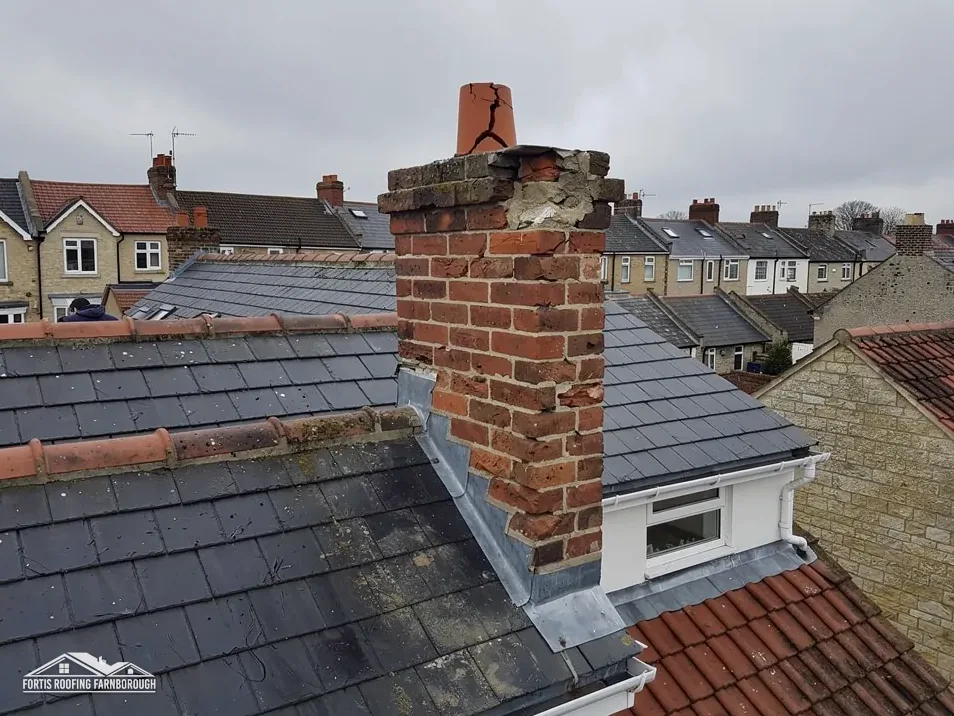
Putting back the same ridge, or a matching slate for one that has slipped, is repair and not alteration, and our record of the roof as found proves the new piece matches. Our chimney repairs page lists what we check from pot to flashing.
The Baptist Church is listed Grade II. Whether its roof work needs listed building consent or follows the denomination's own system turns on which Baptist union or association holds the building and on its present use, so the congregation and Hart settle that first, before a roofer prices anything. The ecclesiastical exemption covers only some denominations.
Around the greens, the survey notes each listed neighbour on the same sheet as your own roof, so any consent question is raised once and answered in writing before work is booked.
Where Hart's view is needed, our enquiry carries the address, pictures of the street-facing roof and chimney and a short account of what we propose, and the job is booked only after the council replies. The wait is usually short, and it means the figure you were quoted does not move.
Often they can. Slates slip when a fixing fails, so a sample is lifted, the battens and nails are photographed, and we judge how much of the roof is still sound. A localised repair keeps the rest in service, and re-roofing is advised only when the survey shows the slope as a whole is failing.
The direction covers a dwelling's frontage, roof slope included, so a change of look needs Hart first. Hart's guidance is that traditional like-for-like repairs to unlisted buildings need no permission. We record the slope before work, and keep the photographs for you. Whether the direction reaches your own address is confirmed with Hart before pricing.
It turns on which Baptist union or association holds it and how it is used today, because the exemption covers only some denominations. Where it does not apply, listed building consent from Hart is the route for the Grade II church. The congregation and the council settle this before any roofer is asked to price.
Hampshire County Council puts the application on the scaffold firm, which files it in your name, so there is nothing for you to sign. Hampshire wants a ten working day gap, charges £211.90 for the first 2 weeks and gives no extensions once a licence is issued. A scaffold kept inside your own property needs no licence at all.
Get your free roof quote
Send your road and a description of the problem, and we will arrange a survey with photographs.
10-year workmanship guarantee, in writing.