Hawley Park and Green
Hart designated the conservation area in January 1989, at the request of the then Hawley Parish Council.
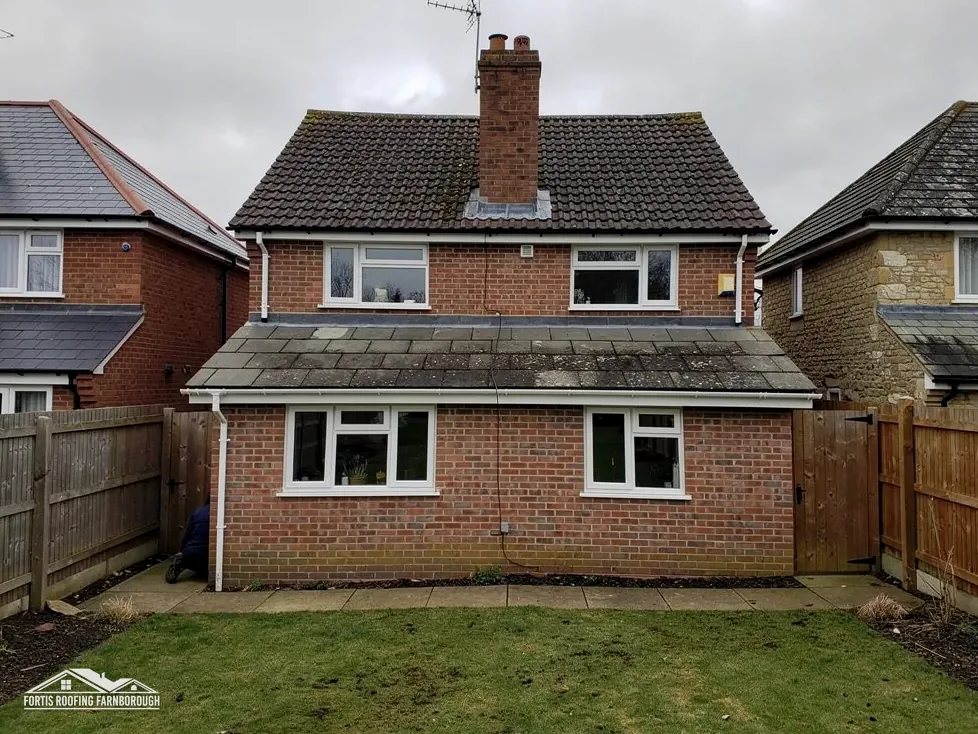
Roofs in the Hawley Park and Green conservation area and beyond
Hawley is a village beside its common, north-west of Farnborough, with a conservation area designated in 1989. We survey each roof, then give one written price.
Hart designated the conservation area in January 1989, at the request of the then Hawley Parish Council.
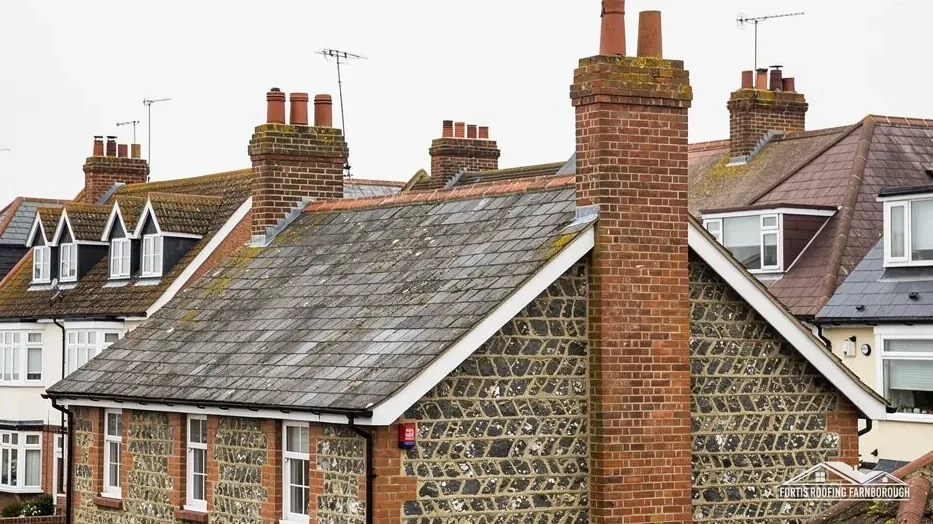
Hart's appraisal records slate on the 19th-century lodges and old hand-made clay tiled roofs around the green.

Holy Trinity Church, Hawley Park House, its former stables and Henry Randell's Almshouses are all listed Grade II.
Map of Hawley with Blackwater, Sandhurst, Frimley, Camberley, Farnborough marked around it.
Map data © OpenStreetMap contributors. Loads only when you ask for it.
Blackwater lies just to the north, Sandhurst and Owlsmoor beyond it, Camberley north-east, Frimley south-east, and Cove with West Heath south.
About 2.5 road miles north-west of Farnborough · Hart District Council and Hampshire County Council.
Hawley, park and green
What Hart's conservation area and its 1998 Article 4 direction mean for a Hawley roof, what the council's appraisal records about slate and clay tile, and which bodies inspect work and issue scaffold licences.

| No. | Chapter | The figure it turns on |
|---|---|---|
| 01 | Hawley Park and Green, designated 1989, directed 1998 | Designated January 1989; Article 4 1998 |
| 02 | Slate lodges, clay-tile almshouses and orange-red brick | Slate on lodges; clay tiles on almshouses |
| 03 | Hart's planners, Rushmoor's inspectors and Hampshire's scaffold | Hart plans; Rushmoor team inspects |
Chapter 01 of 03
| Record | Detail | For roof work |
|---|---|---|
| Conservation area | Hawley Park and Green, January 1989 | Ask Hart about changes to the roof's look |
| Distance from centre | Within about 0.75 km of Hawley | Check your address on Hart's map |
| Article 4 direction (1998) | Frontage alterations, including a frontage roof slope | Ask Hart before changing a front slope |
| Same direction | Erecting, altering or removing a chimney | Ask Hart before changing a stack |
| Applies to | Unlisted dwellings in the area | Listed buildings need consent as well |
Hawley Park and Green became a conservation area in January 1989. Hart's appraisal says it was designated at the request of the then Hawley Parish Council, so the designation began with a local request. The national planning dataset puts the area within about 0.75 km of Hawley's centre. Hart is the planning authority for Hawley, and it is the council that tells you whether your address falls inside the line.
In 1997 Hart decided to apply Article 4 directions to most of its conservation areas, and the Hawley Park and Green direction of 1998 is one of them. Hart's list sets out what the direction reaches: changes to a house front that involve a front-facing roof slope, along with porches, gates, walls and frontage painting, and any new, altered or demolished chimney, all on unlisted dwellings. Inside the mapped area an Article 4 direction takes certain permitted development rights away, so an alteration that would normally need no application may now need one.
Hart's own advice on repairs is more reassuring. It says repair work to an unlisted building needs no planning permission provided it follows the original in every detail and uses identical materials. For a roofer that reads as a plain instruction: match what is there, and keep before and after pictures that prove the match. Re-covering a front slope in something different, or altering or removing a chimney, is the kind of work where Hart's planning team has the final say, and we ask before we price it, so that no one is surprised later. Our guide to chimney repairs in a conservation area explains how that question is handled.
Back slopes and houses outside the boundary are different matters, but we do not assume which is which. We look up each address, record the roof as it stands, and tell you in the report whether the direction is likely to matter, so you can decide before any money is committed. Where the direction does apply, the photographs taken at the survey double as the record the planning team will want to see, and you keep a copy for your own file, which helps if the house is ever sold.
Two Hart dates
Chapter 02 of 03
What the records give for Hawley
The Victoria County History of 1911 says Hawley was made an ecclesiastical district out of Yateley in 1838, took in the village of Blackwater, and was covered in large part by Hawley Hill Woods and Hawley Common. Today the two places form one civil parish, Blackwater and Hawley, which the 2021 Census counted at 5,867 usual residents. Hawley itself sits on the Hampshire side of the Blackwater valley, with Blackwater just to its north.
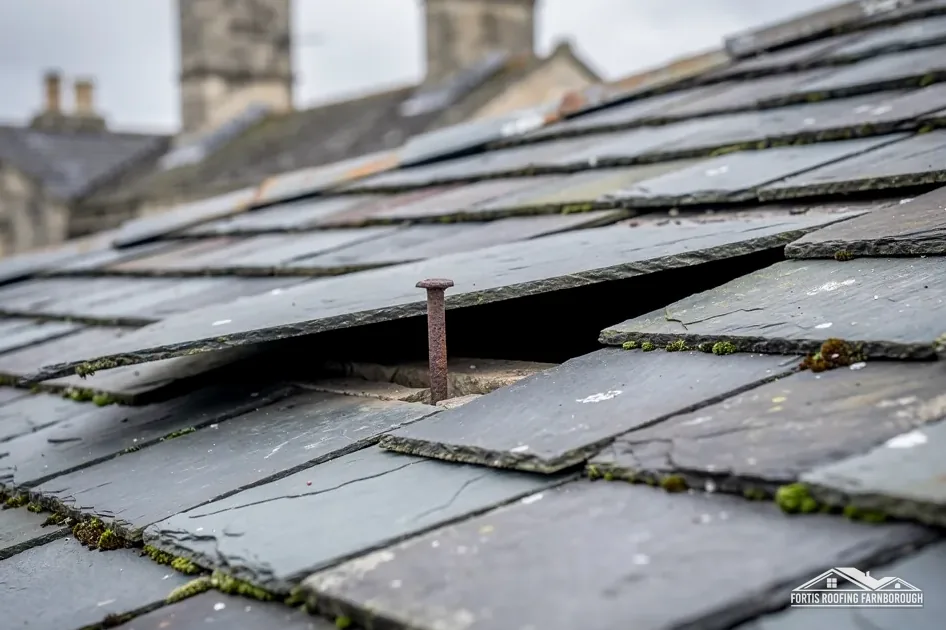
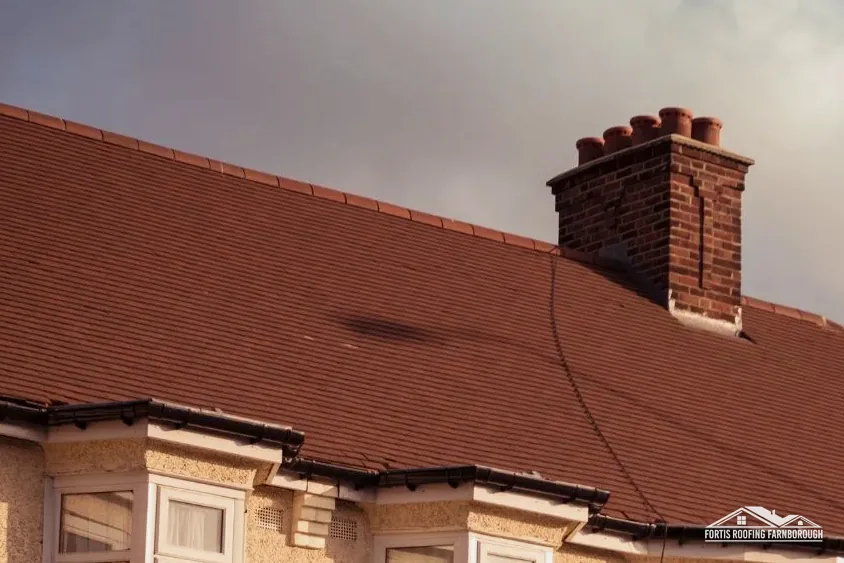
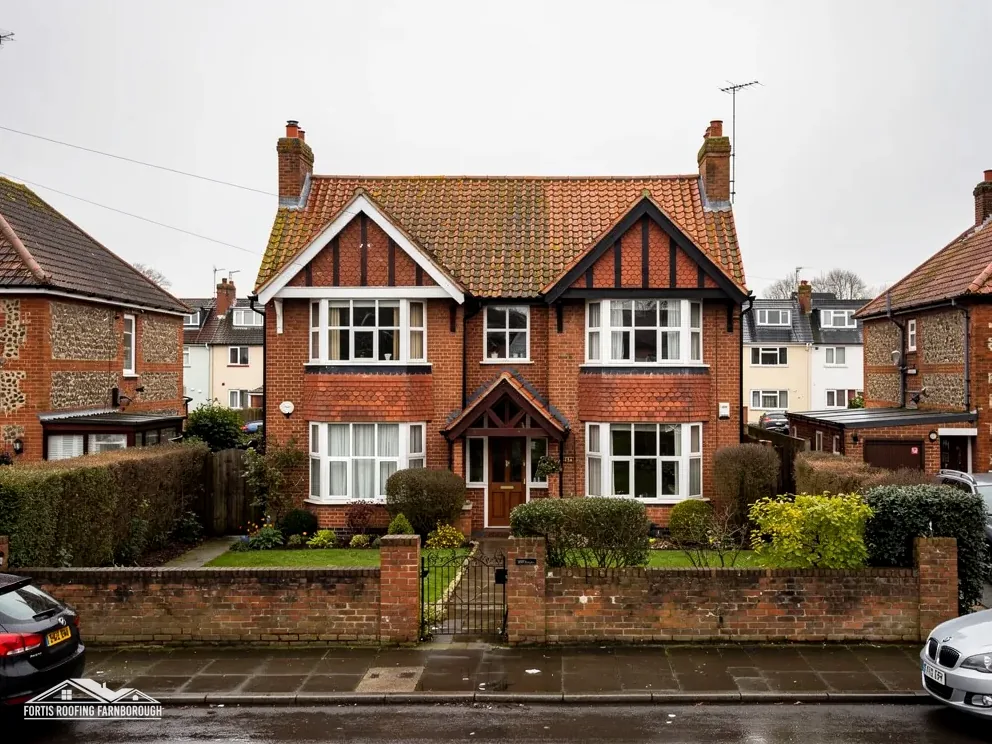
Hart's appraisal is specific about materials. Slate, it says, was the traditional roofing material of the 19th century once transport had become available from the Welsh quarries, and the lodges carry slate. Holy Trinity Church and the almshouses use local orange/red brick, and the old hand made clay tiled roofs of buildings around the green are called important original features. We use those statements for what they are: the council's description of named buildings, not a rule for every Hawley house.
The consequence for a repair is a matter of matching. Slate needs the right size, thickness and fixing, and clay tiles need the right colour, texture and camber. We photograph what is on the roof, keep sound tiles and slates for re-use, and set a sample against the existing covering before a replacement is chosen. A repair that sits well beside its neighbours is better than one that is merely watertight, and on a conservation-area street the difference is visible from the pavement. Our slate roofing page explains how slate is repaired and replaced.
Where lead flashings, valleys or hips are involved, the survey records the code and condition of the sheet, because a failed lead detail is a common reason for a leak on an older roof. Our lead roofing and lead work page explains how lead is chosen and fixed.
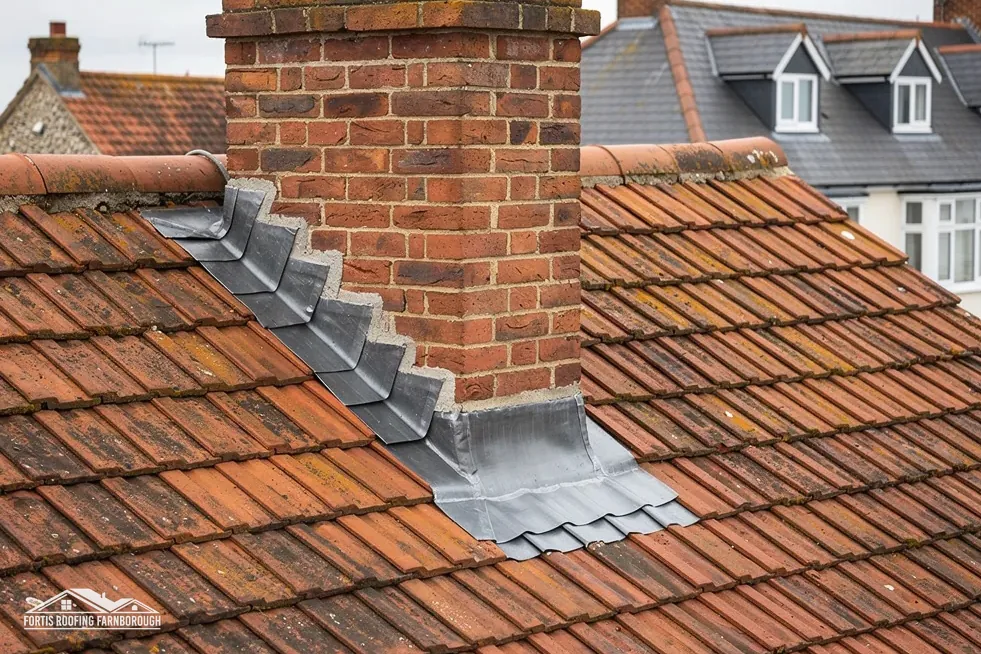
Brick chimneys deserve a word too. A stack is several parts with separate lives: the pots, the flaunching on top, the pointing, the flashings at the base. We photograph each, and our chimney repairs page explains which fault leads to which repair, so that a leaking stack is mended at the source and not painted over.
One practical point on timing. Sourcing slates or clay tiles to match can take longer than buying a standard tile, which is why the survey settles the specification early. You are told what has been chosen, why, and when it will arrive, before the scaffold is booked.
Chapter 03 of 03
| Role | Body for Hawley addresses |
|---|---|
| Planning authority | Hart District Council |
| County and highway authority | Hampshire County Council |
| Building control | Hart and Rushmoor Building Control Partnership |
| Scaffold licence on the highway | Hampshire County Council; the scaffold firm applies |
| Civil parish | Blackwater and Hawley |
Hart does not run building control of its own. Its pages say the service is supplied by Rushmoor, and that the team works from Rushmoor Borough Council's offices in Farnborough. For a Hawley roof the inspector comes from that shared team, or from a registered building control approver if you choose the private route, which you are free to do.
Neither route is needed to refix a few tiles. The Planning Portal says that when less than 25 per cent of the building envelope and less than 50 per cent of the roof is affected, no application is normally needed, whereas a covering that is 15 per cent or more heavier needs approval and a structural check. On the survey we calculate the area involved, giving you a figure to look at before any date is fixed. If an application is needed, we tell you before dates are fixed, and the photographs and measurements support it.
Section 169 of the Highways Act 1980 requires a licence for scaffolding on a highway, and for Hawley that licence comes from Hampshire County Council. Its page makes the scaffolding company the applicant, acting for the customer. At Hampshire County Council the licence needs 10 clear working days of notice, costs £211.90 for 2 weeks and £72 for each further 2, and cannot be extended, so we apply for a long job's whole duration at once. Poles on a private road are outside the scheme entirely.
Hawley's record also notes land within about 250 m of the centre in Flood Zone 2 on the Environment Agency's Flood Map for Planning. The map describes land and says nothing about tiles, but it is a fair prompt to look after gutters and downpipes, so every outlet and joint is photographed at the survey, with any run that holds water after rain noted in the report.
If you would rather deal with the inspector yourself, you can. We give you the report, the measurements and the photographs, and the shared team works from the Farnborough office that serves both councils. The evidence is yours either way, and so is the choice.
Hart's list says it reaches changes to a dwelling's frontage that involve a front-facing roof slope, and any new, altered or demolished chimney. Whether your address lies in the area, and what the direction reaches, is for Hart's planners to say; we put the question to them before any quote touching the front of the roof.
No. Holy Trinity is Grade II listed, yet it is in Anglican use, so roof works on it go through the faculty system under the ecclesiastical exemption. Listed building consent is the route for the other listed buildings, such as Hawley Park House, its former stables and Henry Randell's Almshouses, for any work affecting their character.
Hart's building control is supplied by Rushmoor, working from Rushmoor Borough Council's Farnborough offices. A registered building control approver is the private alternative. Staying within the Planning Portal's limits of 25 per cent of the envelope and 50 per cent of the roof keeps both away; the survey tells you where your own job stands against them.
It does not change how coverings are fixed, because the map rates land and not roofs. It is a prompt to keep gutters, outlets and downpipes in working order so rain leaves the roof properly, and to look at them after heavy weather. Our surveys photograph every outlet, joint and run, and report any section that holds water.
Get your free roof quote
Tell us your Hawley road and what you have noticed. A survey is arranged, then one written price arrives.
10-year workmanship guarantee, in writing.