The short answer
Repairing a chimney like for like in a conservation area usually needs no planning application, but altering or removing one can. The deciding factor is often an Article 4 direction, which withdraws permitted development rights for chimneys in set areas. Hart, Rushmoor's Cargate area and Guildford all have such rules, so confirm with your council before work begins.
What the designation changes
A conservation area is an area whose character the council has decided to protect. Designation does not freeze buildings, and day-to-day repairs go on as in any street. What it does is tighten some permissions and sets up the possibility of extra controls.
The first point is the baseline. Under section 55 of the Town and Country Planning Act 1990, work that leaves a building looking materially the same from outside counts as no development whatever. A chimney repair that restores what stood there before is the usual example.
The second is permitted development, the set of national rights that let owners do some work without applying. Conservation areas count as article 2(3) land, where some rights are removed, such as permitted dormers. Re-roofing under Class C is not removed, so the covering can still change in the normal way.
The third is the Article 4 direction. GOV.UK describes it as a direction that lets a local planning authority withdraw specified permitted development rights across a defined area. Chimneys are one of the things a council may choose to include.
The real question for a chimney is whether an Article 4 direction applies at that address, whatever the area is called. The designation alone does not answer it.
What the councils in our area say
Only a few councils in this area have published roof-relevant detail, and we use only what is sourced.
- Hart District Council made directions in 1998 for most of its conservation areas. Except for North Fleet, they reach chimneys on dwellings, whether built, altered or taken down, and frontage roof slopes. Hart's page adds that traditional repairs to non-listed buildings, true to the original details and materials, need no planning permission.
- Rushmoor Borough Council has a direction for the Cargate area in Aldershot, and chimneys and flues sit among the controlled works there when they are visible to passers-by.
- Guildford Borough Council states that a chimney in a direction area cannot be altered or taken away unless permission is given, and its online map lets you check an address.
Basingstoke and Deane has directions for four town-centre areas covering roof changes, but those are not read here as chimney rules. For every other council, ask whether an Article 4 direction applies. Our guide to Rushmoor conservation areas and roof work covers the borough in more detail.
Repairs that stay like for like
Most chimney repairs are like-for-like, and these are the ones to keep that way in a protected area.
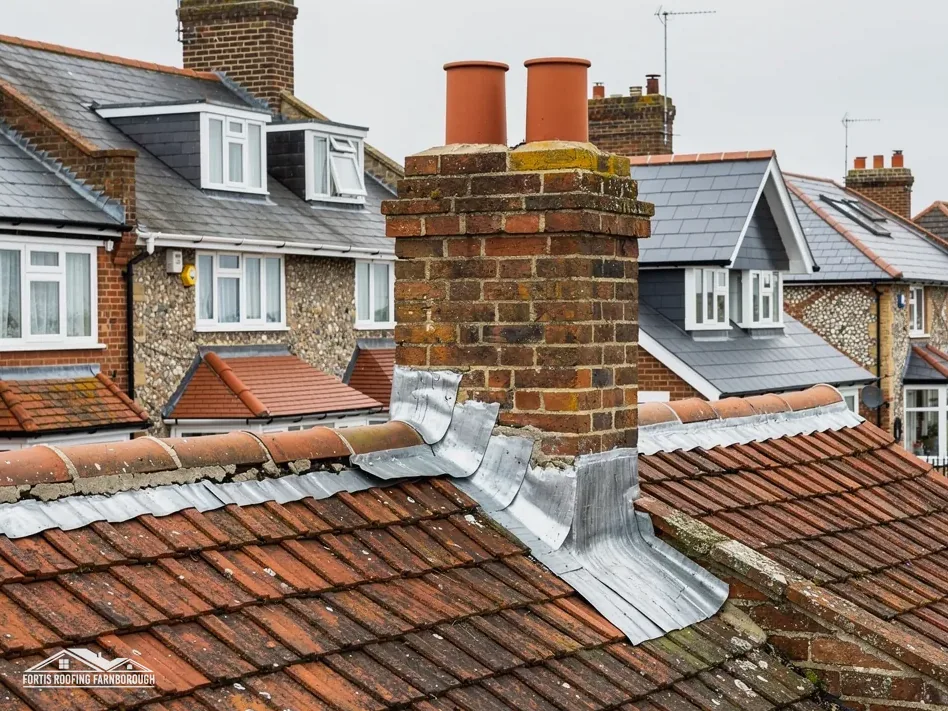
Repointing should match the original joint in colour, profile and mortar type, so that the stack ages evenly instead of showing patches. Replacement bricks should match the old ones in size, colour and texture, and reclaimed bricks are often a better match than new. Pots are replaced with the same pattern, and flashings are renewed in lead, which also weathers to a colour that suits an older roof.
Changes in shape or height are different. Rebuilding a stack lower, taking one down or leaving off the pots alters the roofline, and that is the kind of work an Article 4 direction can catch. The same is true of changing the material, such as replacing brick with render.
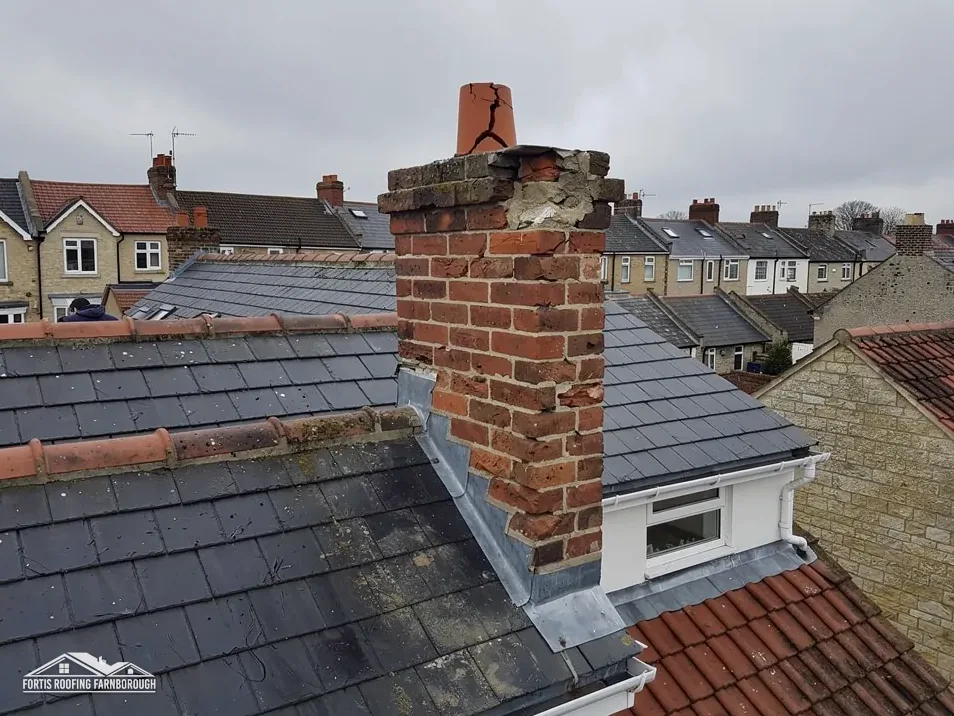
A repair that looks small can still need thought. If a stack is so decayed that it must be rebuilt, the rebuild should use the same bricks and the same pattern, and the council may want to see the details. Our answer on a chimney pot replacement covers the pot case, and the chimney rebuild guide covers larger work.
Listed houses are a separate matter and need their own consent route.
Checking before work starts
The reliable way to settle the question is to ask the council that covers the address. That means the local planning authority named for your area, which in most of Hampshire is the district council and in Surrey is the borough or district council until the changes of April 2027.
Some councils offer a map. Guildford's page invites you to select the Article 4 layer and check by address. Others ask you to email or call the planning team. A few questions will do the job: is the property in a conservation area, does an Article 4 direction apply, and does it cover chimneys? Keep the reply, because a later buyer's solicitor may ask for it.
If the answer is that consent is needed, the work waits for a decision. If the answer is that the repair is like for like and needs none, you can go ahead.
We build the check into the survey. Photographs of the stack and its details go with your enquiry to the council, and our recommendation is based on the evidence. You then receive a written price that reflects the materials the area expects. If the house is listed, our guide to repairing a chimney on a listed building sets out the consent route, and the chimney repairs hub covers the rest.