Afton Cottages by Lutyens
Sir Edwin Lutyens designed Afton Cottages on Church Road in 1898, with tile-hung gables and plain clay tiled roofs.
Roofs on Arts and Crafts houses and Lutyens cottages
Milford is a village on the old Portsmouth Road, with Lutyens cottages of 1898 and a conservation area from 1981. We survey tile, brick and tile-hung gables with care.
Sir Edwin Lutyens designed Afton Cottages on Church Road in 1898, with tile-hung gables and plain clay tiled roofs.

Waverley's appraisal says many houses are Surrey Arts and Crafts vernacular: pitched roofs, clay tiles, red brick, tile-hanging, some render.

Numbers 9, 11 and 15 Church Road were listed Grade II in 1973, near the church of 1844.
Map of Milford with Witley, Godalming, Shackleford, Farncombe marked around it.
Map data © OpenStreetMap contributors. Loads only when you ask for it.
Milford is a village on the old Portsmouth Road just south-west of Godalming, while Farnborough is 15.7 road miles away, to the north-west of the village.
About 15.7 road miles south-east of Farnborough · Waverley Borough Council and Surrey County Council.
Milford, vernacular and the 1981 area
What Waverley's appraisal records about Milford's clay tiles, tile-hanging and locally made materials, how long coverings last on published figures, and what the 1981 conservation area and the edge of the Surrey Hills mean for repair.
| No. | Chapter | The figure it turns on |
|---|---|---|
| 01 | Waverley's village on Surrey's old road | Waverley plans, Surrey licenses poles |
| 02 | Clay, brick, Bargate stone and a clock of years | Clay tile: 60 to 80 years, typical |
| 03 | The 1981 conservation area and the Landscape's edge | Conservation area designated 25 February 1981 |
Chapter 01 of 03
| Paperwork | Body for Milford |
|---|---|
| Planning permission | Waverley Borough Council |
| Building control | Waverley Building Control, the council's own service |
| Scaffold on the Portsmouth Road or a lane | Surrey County Council, until 31 March 2027 |
| After March 2027 | West Surrey Council takes over from 1 April 2027 |
| Civil parish | Witley and Milford |
Part of the civil parish of Witley and Milford, Milford takes its planning decisions and its building control from Waverley, the latter through Waverley Building Control. The old Portsmouth Road and the other highways stay with Surrey County Council until 31 March 2027, on which date a new West Surrey Council takes both roles. The A325 in Farnborough is 15.7 road miles away, and the village's built-up area holds 6,486 people.
No percentage for re-roofing is set by Waverley, so two national tests apply. The first is size: a quarter of the envelope and half of the roof are where an application starts to be the norm. The second is weight, with a heavier covering, by 15 per cent, raising approval and a structural check. On an older house with timbers sized for clay tile, the second test is the one we watch.
A word about estimates. Compare any price with the work it includes. An Arts and Crafts roof can be deep and complicated, so scaffold on one can be a large item, and VAT and waste disposal add to it. A low figure that is silent on them will not stay low. Our single written total follows the survey, with its contents set out.
The Portsmouth Road carries traffic, and a house on it may sit close to the pavement; Waverley's appraisal notes a stretch where the footpath is only about 1.5 m wide. Where poles stand on the public footway, Surrey County Council's licence applies: £208 for each 28-day period until April 2027, with 10 working days of notice. Nothing in the council's wording identifies the filer of the form, so that goes to the scaffolder at booking. Where a house has a front garden, poles that stay on your own ground are not licensed at all.
Frontage and approach are measured on the survey day, and the arrangement, the likely days and the plan for traffic and deliveries follow from that.
Scaffold terms
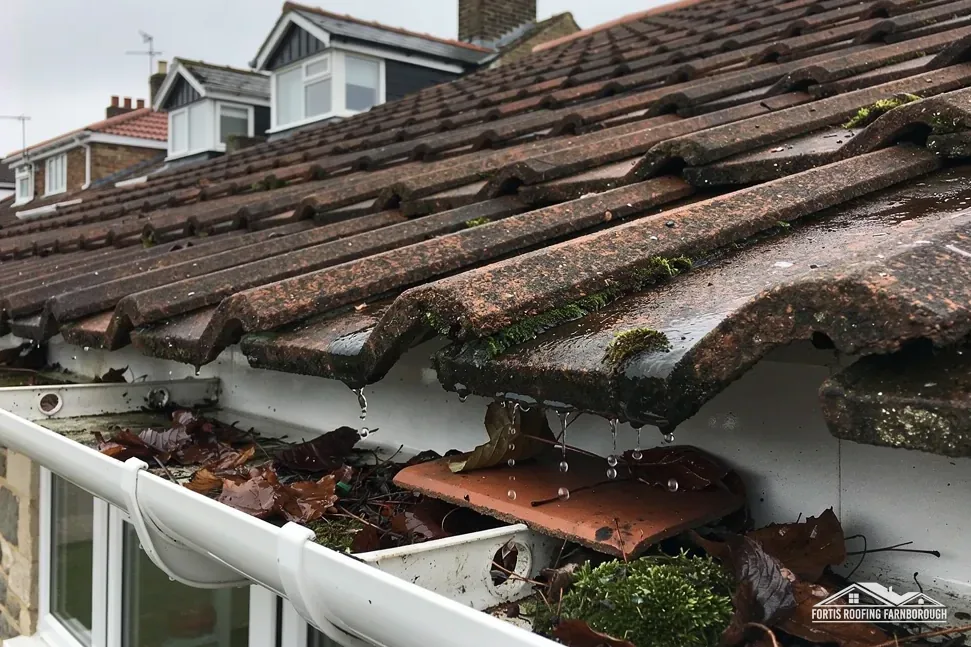
Where a house stands among trees, leaf fall follows, and leaf fall means gutters and valleys that need clearing before and after the work, so the new roof is not loaded with debris on its first day. We build that into the plan.
If rain is coming in, a temporary covering comes first. The lasting repair follows when the licence, the access and the weather allow, and you hear each day what was done.
Chapter 03 of 03
Milford's designations in four published points
The Milford conservation area was designated on 25 February 1981, and it lies within about 0.75 km of the village centre. About 30 per cent of the 1.5 km area around Milford lies inside the Surrey Hills National Landscape, so Milford sits on its edge. The place point itself is outside, and Waverley's map tells you whether your own address is in the Landscape, the conservation area, both or neither.
A conservation area does not forbid repair. The appraisal's vernacular of clay tile, brick and tile-hanging sets the standard for matching in Milford, and Waverley's planners should hear of any new covering, altered ridge or rebuilt stack before a price is agreed. Check whether an Article 4 direction applies with Waverley Borough Council; we put the address to the council before pricing a change.
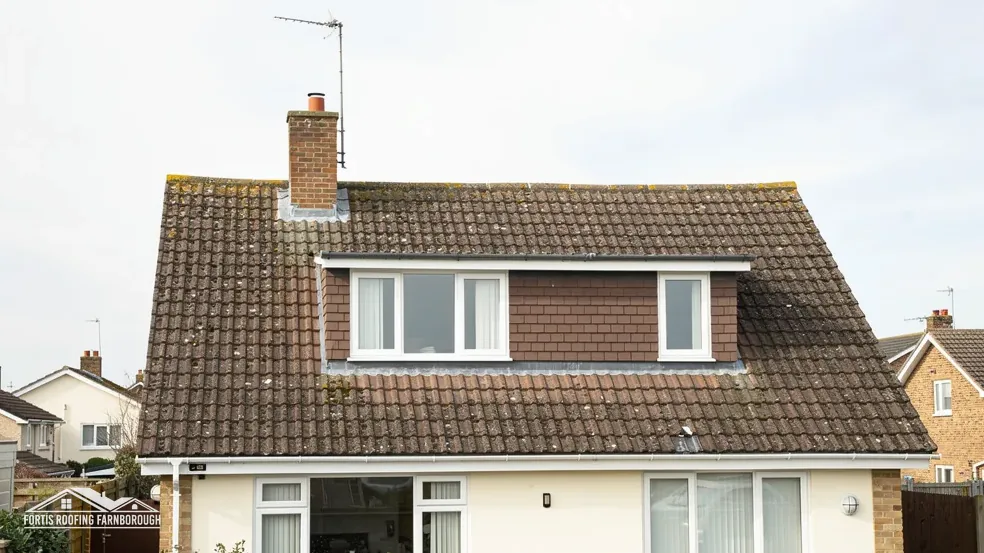
Because the appraisal records that Milford's materials were made locally, a good match for an old roof is often a reclaimed local tile and not a new factory one. Reclaimed clay tile already carries its weathering, and it fits the pattern of the street better than a bright new tile would. We source it where we can and show you samples against photographs before an order is placed.
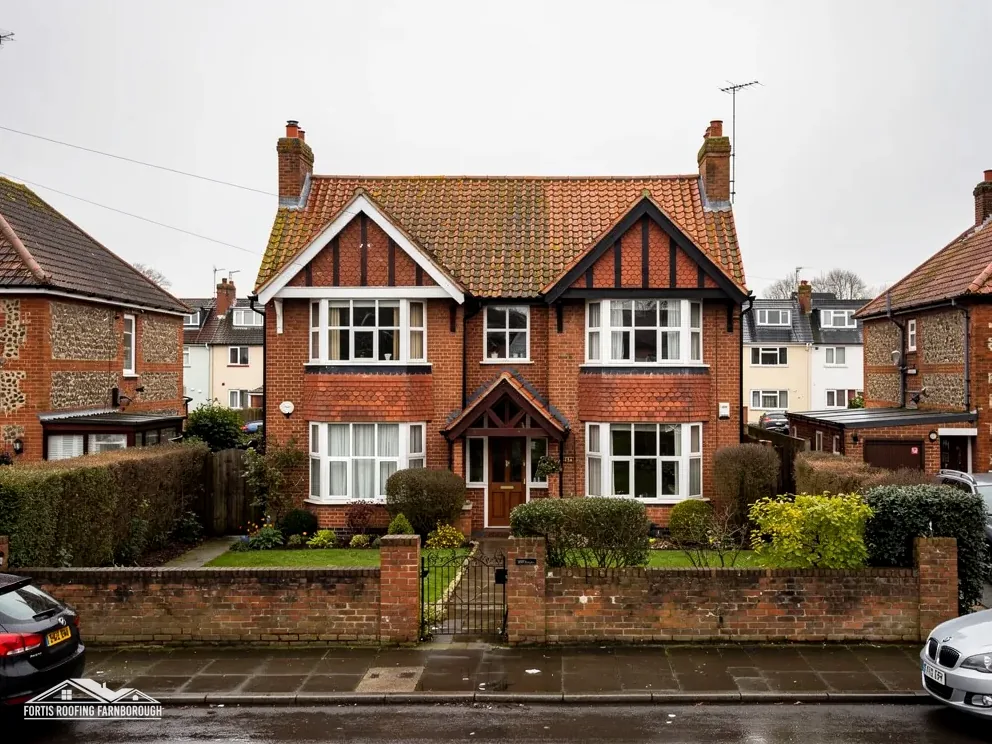
Numbers 9, 11 and 15 Church Road, which the appraisal identifies as Lutyens's Afton Cottages, were listed Grade II on 3 May 1973. Nine Elms Cottage, with Chilston and the cottage adjoining, and Old Hurst are also Grade II. Eight listed buildings stand within 500 m of the village centre. Milford's ecclesiastical parish was separated from Witley in 1844, the year St John the Evangelist was built of local Bargate stone, the county history says; if Anglican worship continues there, roof work on the church is a faculty matter.
An unlisted house outside the conservation area and the Landscape faces fewer questions, but matching still serves the street. Dated photographs help at a sale and guide the next repair.
On the Environment Agency's flood map, parts of the land within about 250 m of the centre lie in Flood Zone 3, so roof water is worth leading away carefully. We flush gutters where safe and photograph outlets. Our gutters, soffits and fascias page explains how rooflines are renewed.
The flashing between hung tiles and the roof slope is the usual culprit, because water that gets behind it runs down behind the tiles and rots the battens. We expose the junction, photograph the flashing and battens, and tell you whether re-hanging, a new flashing or a fuller repair is needed, matching the existing pattern.
Not necessarily. HomeBuilding puts clay tile at 60 to 80 years as a typical range, never a promise, and Marley notes the BRE's 60-year minimum is for clay only. A century-old roof may have been re-covered. We lift tiles, check the battens and tell you what the evidence says about what remains.
Only where your address is inside it. About 30 per cent of the 1.5 km area is inside the Surrey Hills National Landscape, and the village centre point lies outside. Designated land has fewer permitted development rights, so Waverley's map matters. We check your address before the survey and plan accordingly.
Where the church serves an Anglican congregation, roof work follows the faculty system through the ecclesiastical exemption, and Waverley's listed building consent is not the route. It was built in 1844. A different user would mean a different route, so the church itself, or whoever holds the building, is the place to ask first.
Get your free roof quote
Name the Milford road you live on and the problem you see, and a surveyor will be booked.
10-year workmanship guarantee, in writing.