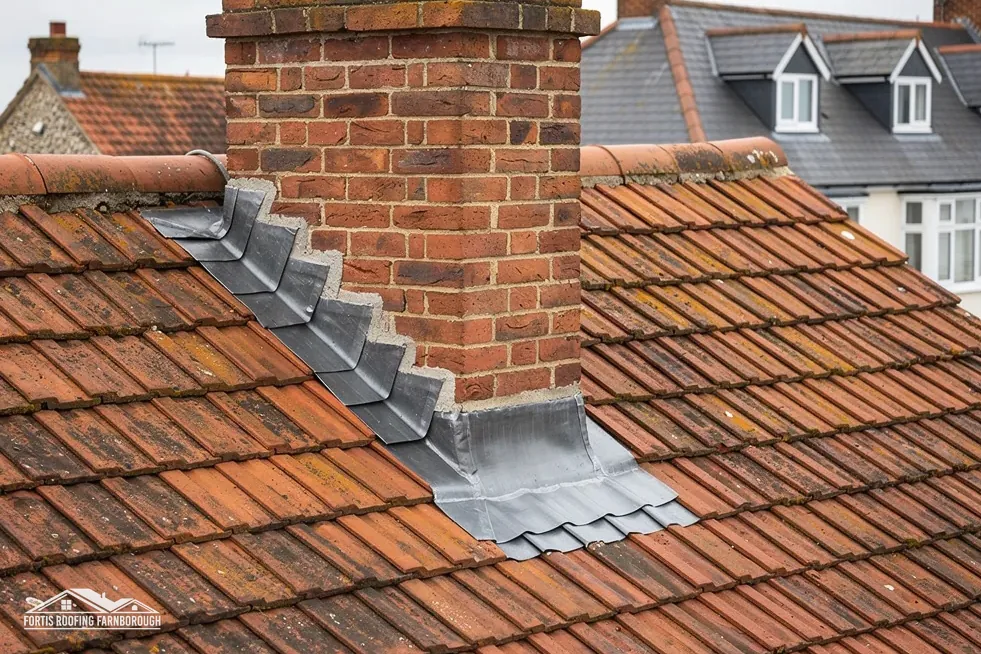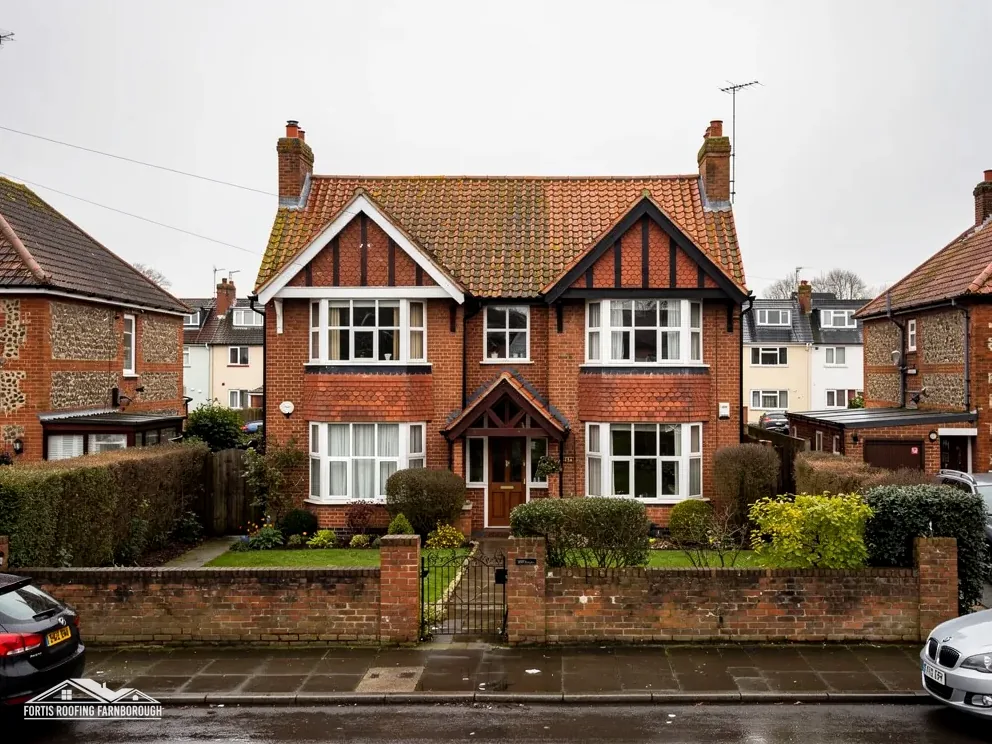
A sandstone church
St John the Baptist's is built of local sandstone rubble with hard chalk dressings, and has tiled roofs.
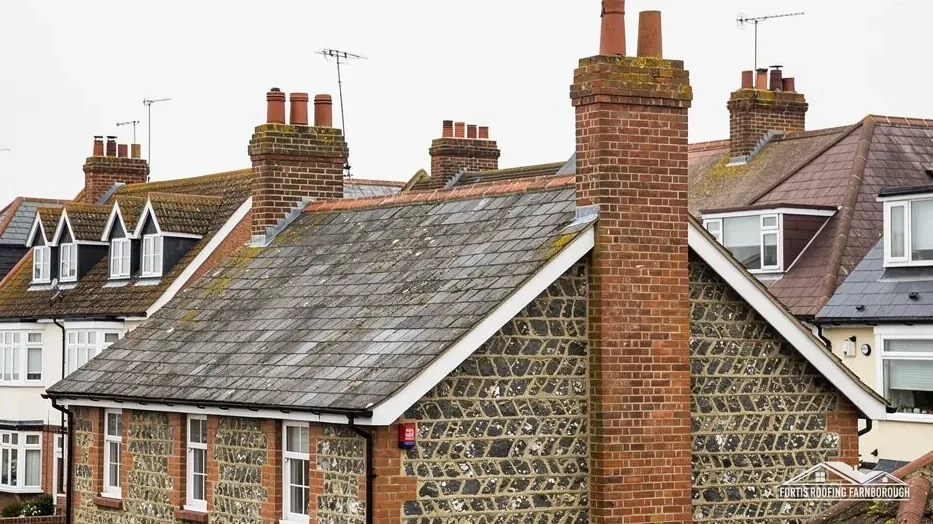
Roofs below the Hog's Back, from a sandstone church to farm cottages
Puttenham lies on the Hog's Back's southern slope in the Surrey Hills National Landscape, with 22 listed buildings within 500 m. Each roof is priced once, after the survey.
St John the Baptist's is built of local sandstone rubble with hard chalk dressings, and has tiled roofs.

Two barns near Home Farm House and Farm Cottage are each Grade II, among 22 listed buildings within 500 m.
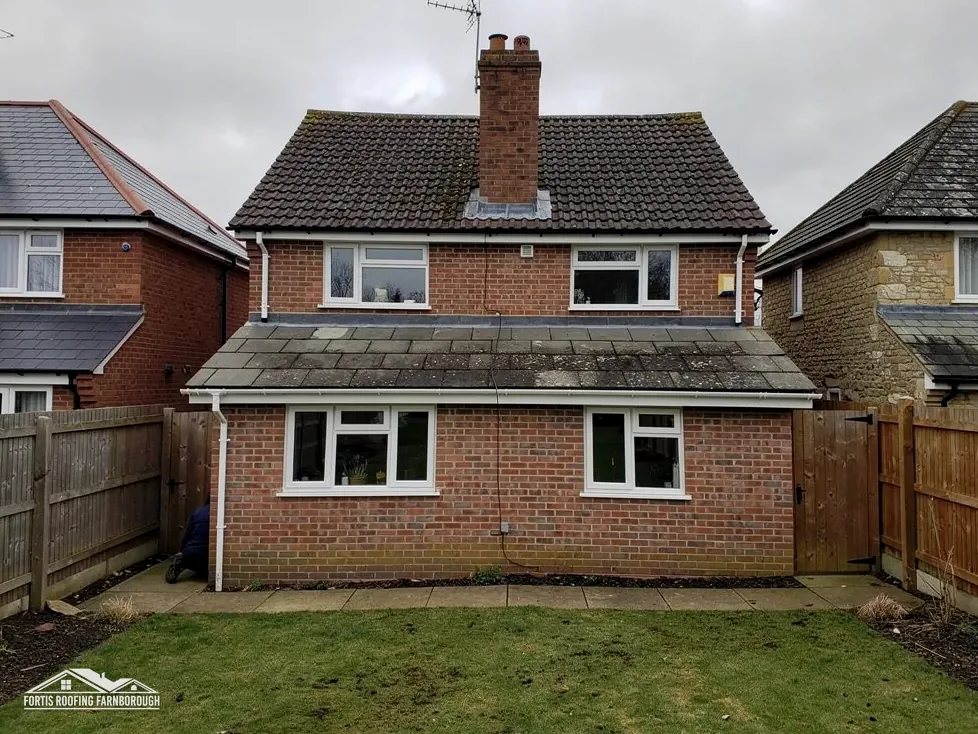
The low-density village runs along its road, with some newer 1950s housing to the west.
Map of Puttenham with Shackleford, Compton, Seale, Normandy marked around it.
Map data © OpenStreetMap contributors. Loads only when you ask for it.
Shackleford lies to the south, Compton to the east, Seale and Tongham to the west, Normandy to the north, and Wood Street to the north-east.
About 11.5 road miles south-east of Farnborough · Guildford Borough Council and Surrey County Council.
Puttenham, priory, church and hill
Which bodies regulate a Puttenham roof, what the 1911 county history and Guildford's profile say of the church and the village, and what the National Landscape, the conservation area and two Grade II* buildings mean for repairs.
| No. | Chapter | The figure it turns on |
|---|---|---|
| 01 | Guildford, Surrey and a National Landscape | Guildford plans; the National Landscape adds care |
| 02 | Greensand, chalk and a hop district's edge | 591 residents, ONS Census 2021 |
| 03 | Grade II* priory and church, conservation area | Grade II*: the priory and the church |
Chapter 01 of 03
| Role | Body for Puttenham addresses |
|---|---|
| Planning authority | Guildford Borough Council |
| County council and highway authority | Surrey County Council (until 31 March 2027) |
| Building control | Guildford Borough Council, its own service |
| Landscape designation | Surrey Hills National Landscape (formerly AONB) |
Puttenham stands 11.5 road miles away on the A325 Farnborough Road measure, south-east of Farnborough. Planning is Guildford Borough Council's job, and it keeps its own building control staff, while the roads stay in Surrey County Council's charge up to 31 March 2027. Puttenham lies in the Surrey Hills National Landscape.
Whether a roof job reaches Guildford's inspectors turns on the Planning Portal's two ceilings: 25 per cent of the building envelope and 50 per cent of the roof. In the Planning Portal's wording the envelope is walls, floor, roof, windows and doors added together, which is why even a large patch on one slope can stay inside. Renewing a few tiles or a ridge sits well beneath both ceilings, while a complete new covering lies beyond them. Extra load of 15 per cent or more is a separate trigger: approval under the Building Regulations, and a structural check, however small the area.
The survey puts numbers on all three, so the report states plainly where your job stands against each threshold. You may instead appoint a registered building control approver, one of the private inspectors on the national register (the regime began on 6 April 2024), to check the work in place of Guildford.
For a ridge, Which? gives £80-£300 for one new ridge tile (November 2025, excluding VAT) and MyJobQuote £225-£550 for a ridge (1 October 2026). These are national guides, not our price, and the one written price comes only after the survey.
Guildford's profile describes Puttenham as a low-density village that runs along its road, so scaffold on the carriageway or footway is a matter of one road and its traffic. Surrey County Council's licence costs £208 for each 28 day period, with the form due 10 working days ahead. Whoever files the form is not recorded on the page, a point we raise with the scaffolder before booking. A scaffold standing wholly within your plot sits outside the licence.
On a lane, we settle where deliveries, skips and ladders go before dates are fixed, and the road is open again when the day's work ends.
Should the roof leak while this is arranged, the water is stopped first, and the lasting repair comes after the house has dried.
Chapter 02 of 03
Puttenham in numbers and dates
The 1911 county history records that Puttenham lies on the south side of the Hog's Back, that the village is not on the chalk, and that the Farnham hop district reached into the parish. The Guildford profile adds that the low-density village runs along its road, with some newer 1950s housing to the west. The 2021 Census counted 591 usual residents in the parish, so each roof here is one of a small number.
The history says St John the Baptist's church is built of local sandstone rubble with hard chalk dressings, the outer ones replaced in Bath stone, and has tiled roofs. It tells us what a village builder worked with: stone from the ground, a harder stone brought in for the parts that weather, and tile for the roof. We do not borrow it to describe any house, but it is a reminder that old rural roofs here were designed to shed water off stone walls, and that the junction at the wall head is where they fail.
On a stone house the survey lifts the covering at the eaves and checks the wall plate, the lead at any abutment and the pointing beneath. A roof repaired in patches across the decades is examined one slope after another, and the report names what was found on each.
The newer housing to the west belongs to a different era and a different method. Timber fascias and soffits of that decade have often been replaced since; a retailer, an interested party, gives uPVC fascia as lasting between 20 and 40 years, a typical range and not a promise. Our gutters, soffits and fascias page explains how a roofline is surveyed, and the same eye goes along the gutters, where Brett Martin's guidance is 1 mm of fall for every 600 mm of run.

Because heath and common lie to the south, leaf litter reaches gutters and valleys, and an outlet that clogs spills water over the roof edge. The survey notes which outlets sit under trees.
HSE says a building built or refurbished before 2000 should be treated as possibly containing asbestos, and that insulating board is found in external soffits, so a soffit on a 1950s house is checked before it is touched. Asbestos waste is double-wrapped and labelled, and it travels with a consignment note; it never goes in an open skip.
Chapter 03 of 03
| Designation | In Puttenham | For roof work |
|---|---|---|
| National Landscape | Surrey Hills (formerly AONB) | Ask Guildford before changing a roof's look |
| Conservation area | Puttenham, within about 0.75 km | Ask Guildford before changing a roof's look |
| Grade II* listed | Puttenham Priory (NHLE 1294505) | Listed building consent for work affecting character |
| Grade II* listed church in use | Church of St John the Baptist (NHLE 1029601) | Church of England faculty, not listed building consent |
| Grade II listed | Farm Cottage and barns near Home Farm House | Listed building consent for work affecting character |
Within 500 m of the village centre the heritage list names 22 listed buildings. Puttenham Priory has been Grade II* listed since 19 February 1957 (NHLE 1294505), and St John the Baptist's church since 14 June 1967 (NHLE 1029601). Farm Cottage (NHLE 1029635) and two barns north-north-east of Home Farm House (NHLE 1029600) are Grade II. The Puttenham conservation area lies within about 0.75 km of the village centre.
A Puttenham house can lie in the National Landscape and the conservation area and also be listed, and each layer asks its own question. The first two ask whether the look of the roof may change; a listing asks whether consent has to be won before work begins. Putting back the same tiles, ridge and chimney leaves the look alone. A new material, a reprofiled ridge or the loss of a stack changes it, and the council hears about it before the price is set.
Guildford says its conservation areas can carry Article 4 directions, and under one, removing or altering a chimney needs permission. The council's map answers for each address, and it is read first on any house with a stack.
For the priory, listed building consent is the permission to seek ahead of any change to its character. Because the church still holds Church of England services, its roof work goes through the faculty system under the ecclesiastical exemption, outside the council's consent. The barns and Farm Cottage need listed building consent before changes to their look. Our lead roofing page explains how flashings and valleys on older roofs are renewed without altering how they read from the road.
If a question has to go to Guildford, we attach photographs and measurements, hold the booking until the council answers, and keep a copy in your report; the price is then written once, on settled ground.
A listed building does not make its neighbours listed. Listed neighbours are shown beside your own house in the report, so you can see which of the three designations bear on your roof and which do not, and any consent step is known before the work is booked.
We lift the covering at the eaves, inspect the wall plate and the pointing beneath, and photograph any lead at an abutment. Water gets in where roof and wall meet, so those details are recorded before a repair is recommended, and the report names what was found at each junction, with the photographs attached.
Yes, and in Puttenham it can happen. Each designation asks its own question, so the survey checks all three by address. Putting back the old covering and ridge leaves the look alone, whereas a changed material needs the council first, and listed building consent applies to the listed house itself.
No. The church is listed Grade II*, but as a church of the Church of England still used for worship it falls under the ecclesiastical exemption, so roof work follows the faculty system. Listed building consent from the council is the route for buildings that sit outside the exemption, like the priory and the Grade II barns.
A licence for scaffold over the highway comes from Surrey County Council at £208 for each 28 day period, and the form is due 10 working days beforehand. Its page names nobody as applicant, a gap we close by asking the scaffolder before booking. Poles wholly within a plot sit outside the licence, and the plan states which access suits your roof.
Get your free roof quote
Tell us the road and the symptoms, and we will arrange a visit.
10-year workmanship guarantee, in writing.