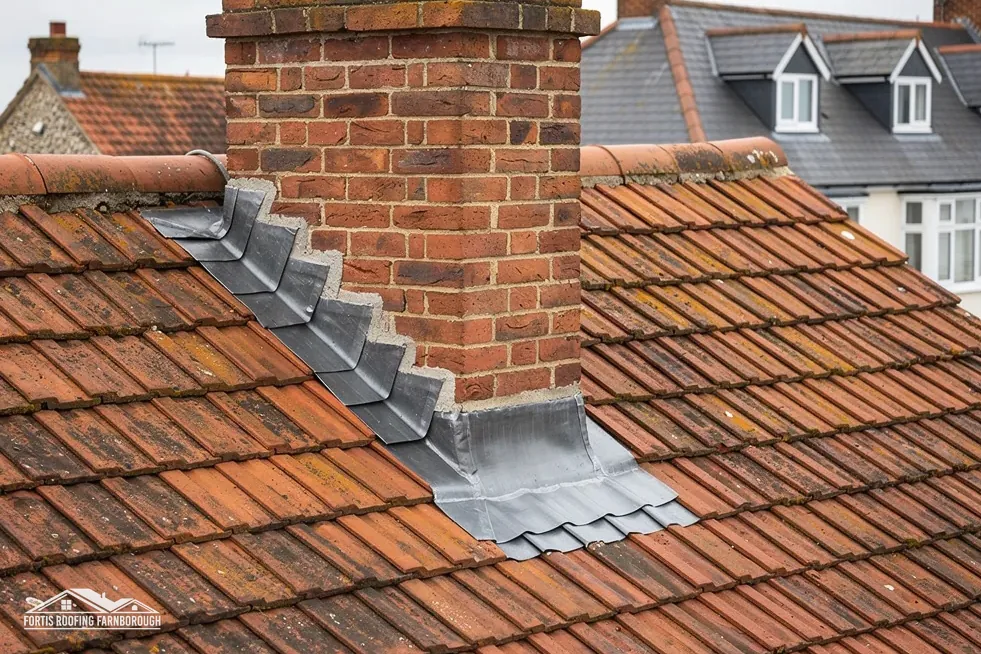
Plain clay-tile cottages
Surrey Heath's Church Road document records plain clay tile roofs on 18th and 19th-century brick cottages.
Roofs from the 1813 enclosure map to Church Road's clay-tile cottages
Windlesham's Church Road keeps many 18th and 19th-century buildings that appear on the 1813 enclosure map. We take each roof one slope at a time, then give one written price.
Surrey Heath's Church Road document records plain clay tile roofs on 18th and 19th-century brick cottages.

Walnut Tree Farm House on Kennel Lane is a 16th-century timber-framed red-brick house with a thatched roof.

Both are listed Grade II, and Pound Cottage was first listed on 28 February 1955.
Map of Windlesham with Lightwater, Bagshot, West End, Surrey Heath, Sunningdale marked around it.
Map data © OpenStreetMap contributors. Loads only when you ask for it.
Lightwater lies to the south-west, Bagshot to the west, West End to the south, Sunningdale to the north-east, South Ascot and Sunninghill to the north, and Chobham to the south-east.
About 8.4 road miles north-east of Farnborough · Surrey Heath Borough Council and Surrey County Council.
Windlesham, Church Road and Updown Hill
The councils behind a Windlesham roof job, what Surrey Heath records about Church Road and its clay tile roofs, and how conservation areas, listings and Article 4 directions bear on a repair.

| No. | Chapter | The figure it turns on |
|---|---|---|
| 01 | Surrey Heath, Surrey and the SHBCC team | Surrey Heath plans; SHBCC inspects |
| 02 | Church Road, mapped in 1813 | 1813 enclosure map, Church Road |
| 03 | Two conservation areas and Pound Cottage | Pound Cottage, Grade II, 1955 |
Chapter 01 of 03
| Role | Body for Windlesham addresses |
|---|---|
| Planning authority | Surrey Heath Borough Council |
| County council and highway authority | Surrey County Council (until 31 March 2027) |
| Building control | Surrey Heath Building Control Consultancy (SHBCC) |
| Scaffold licence on the highway | Surrey County Council, in 28 day periods |
Windlesham sits north-east of us, 8.4 road miles out on our count from the A325 Farnborough Road. Planning here is Surrey Heath Borough Council's job and the roads are Surrey County Council's, and from 1 April 2027 both roles pass to the new West Surrey Council. A project that spans that date may see the council names on its forms change.
Surrey Heath's building control service is Surrey Heath Building Control Consultancy, SHBCC. For a Windlesham roof the yardstick is the Planning Portal's: work touching under 25 per cent of the building envelope and under 50 per cent of the roof stays outside building control in the ordinary way. Refixing a ridge or renewing a run of cracked tiles stays far below both limits. Re-covering a whole house does not, and the application then goes to SHBCC or to a registered building control approver, the private alternative, whose registration rules took effect on 6 April 2024.
Weight is the second test. Where the plan is to swap clay for something heavier, a load that rises by 15 per cent or more brings in Building Regulations approval, and the Planning Portal advises asking an engineer or surveyor beforehand. Our notes weigh the present tiles against the proposed ones, so nothing is ordered until that is clear.
Our report measures and photographs each slope and states whether an application is needed. Any inspection is then built into the programme from the start, so nobody waits on a visit at the end of the job.
A licence from Surrey County Council, the highway authority, covers scaffold that stands over the pavement or carriageway. The council charges £208 per 28 day period and the same again to renew, and it warns that the application fee is non-refundable. Applications are due 10 working days or more before the scaffold goes up. Because Surrey does not say whose name goes on the form, we agree that with our scaffold firm and record it in your job plan. Scaffolding kept wholly on your land is outside the licence rules.
On site, the work area is kept tidy, waste leaves with us, and each day ends with a word on what is done and what follows.
Chapter 02 of 03
Windlesham in dates and residents
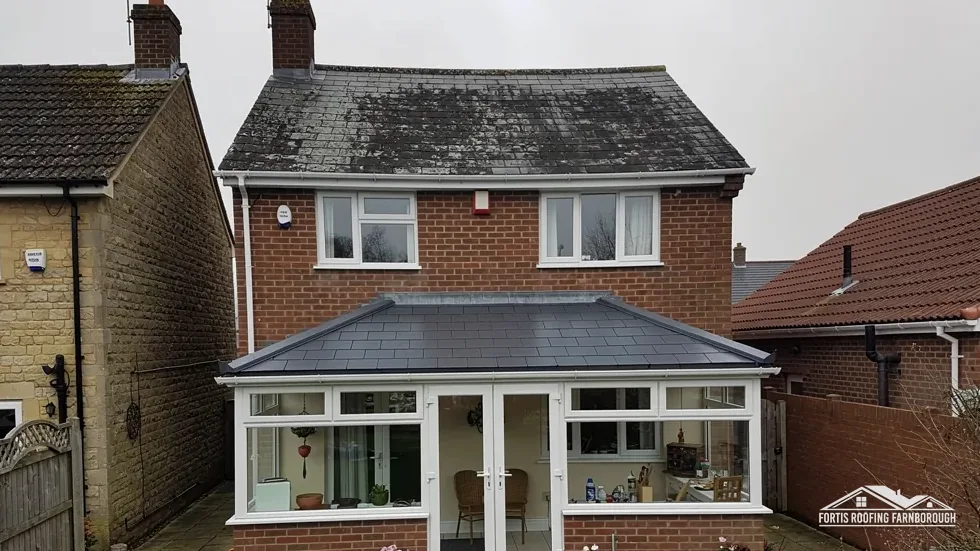
Surrey Heath's Church Road document records that the conservation area was designated in September 1989 and that many of its buildings date from the 18th and 19th centuries and appear on the 1813 enclosure map. An enclosure map records how common land was divided, so a building shown on it was standing by 1813. The 2021 Census counted 16,884 usual residents in the civil parish.
The same document describes house after house on Church Road, Kennel Lane and Pound Lane with plain clay tile roofs, and a few with grey slate. Plain tiles are compact rectangles of fired clay, lapped course over course and hung on battens, the timber strips fixed across the rafters. On a roof that old, a few slipped or cracked tiles are the usual reason for a leak, and the sound tiles around them can often be kept. We lift a sample near the eaves and verge, record the battens and underlay with photographs, and report how much of the covering is still working.
An older roof may also have been re-covered once or more since the 19th century, so the layers underneath can tell a different story from the surface. That is why the survey looks beneath the tiles before a repair is recommended.
Ridge and hip tiles need particular attention. Marley notes that the 2014 revision of BS 5534 ended reliance on mortar alone for them, and BS 8612 is the specification that dry systems for ridge, hip and verge are tested to. On an old cottage we check what holds the ridge, and recommend mechanical fixing where mortar is doing the work alone. The photographs of the ridge fixings go into your report with a note of what we would advise.
Walnut Tree Farm House on Kennel Lane is described as a 16th-century timber-framed red-brick house with a thatched roof. Thatch is a separate craft with specialist thatchers, so our survey work in Windlesham covers the tiled, slated and leaded roofs nearby. Windlesham's older buildings range from a 16th-century farmhouse to 19th-century cottages, and no single repair method suits all of them.
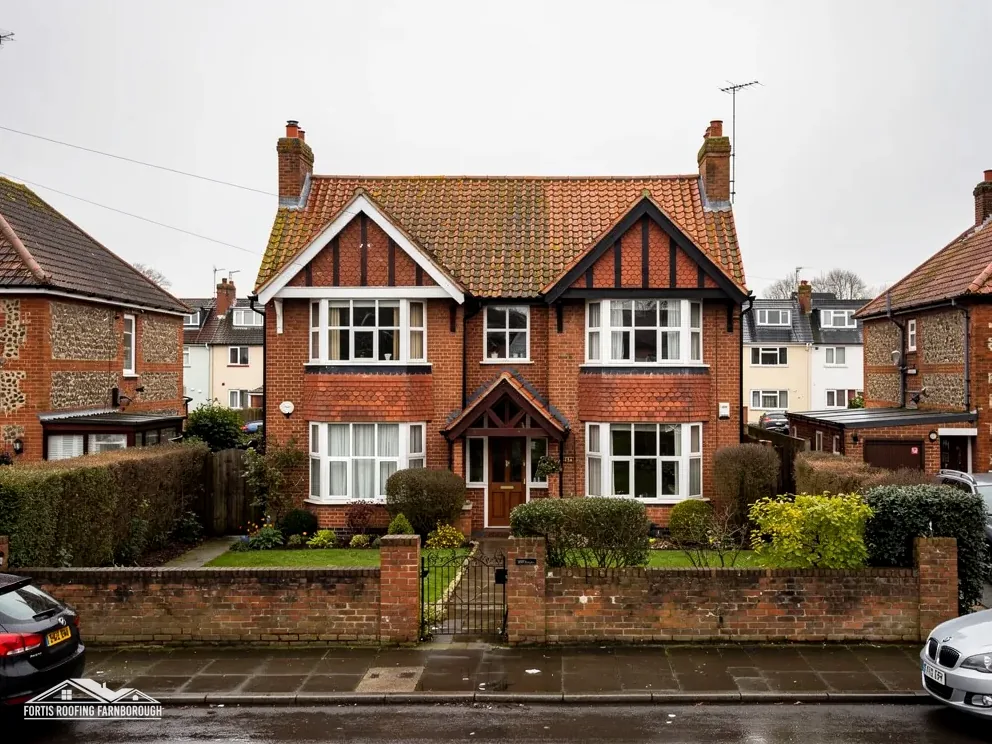
Where a cottage and an extension of a later decade meet, the junction between them is checked as closely as the main slope, because flashings and gutters are asked to do most work there. Our gutters, soffits and fascias page covers the eaves boards and rainwater runs we check.
Chapter 03 of 03
| Designation | In Windlesham | For roof work |
|---|---|---|
| Conservation area | Church Road, Windlesham (designated September 1989) | Ask Surrey Heath before changing a roof's look |
| Conservation area | Updown Hill, Windlesham | Ask Surrey Heath before changing a roof's look |
| Grade II listed | Pound Cottage (NHLE 1377546) | Listed building consent for work affecting character |
| Grade II listed | Pound Meadow (NHLE 1030006) | Listed building consent for work affecting character |
| Article 4 directions | Checked by address with Surrey Heath | Shows whether a roof right has been withdrawn |
Surrey Heath lists nine conservation areas, and two belong to Windlesham: Church Road and Updown Hill. The others include Bagshot Village, Chobham Village and the Basingstoke Canal, so the borough's list is worth reading if your house is near a boundary. Two listed buildings stand within 500 m of the village point: Pound Cottage, listed Grade II on 28 February 1955 (NHLE 1377546), and Pound Meadow, also Grade II (NHLE 1030006).
Living in one does not freeze a roof. What counts is how the building looks from outside, so restoring the same clay tiles, the same ridge and the same verge leaves that look untouched, whereas fresh materials on the slope, an altered ridge or a stack rebuilt to another height or brick can change it. For those changes the right first call is to Surrey Heath's planning team, and we make it with photographs and measurements in hand, not afterwards. A listed cottage adds a second layer, since changes to its character need listed building consent first.
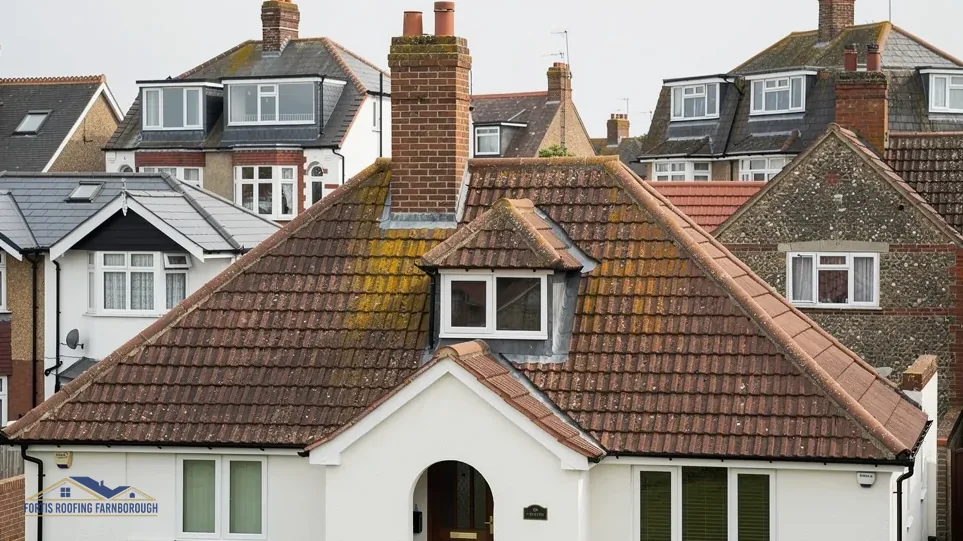
On a listed plain-tile cottage the aim is to keep as much original fabric as we can. Sound tiles go back up, gaps take matching ones, rotten battens are swapped, and each flashing is dressed in lead thick enough for its job. Thickness is graded by a code number, and our lead roofing page explains which code suits a flashing, a valley or a flat section.
An Article 4 direction withdraws named permitted development rights across a mapped area. On a house roof the sensible move is to put that question to Surrey Heath for your street before any figure is given, and we make that enquiry ourselves, sending the address and a photograph of the frontage. Our chimney repairs page explains what we check on a stack.
If any doubt remains before the survey ends, we send Surrey Heath's planning team a short note with the address and photographs, and we wait for the reply before we book the work. Working in that order means no roof sits open while consent is pending, and the figure we quote does not shift.
Where they are sound, yes. A sample is lifted near the eaves and verge, the battens and underlay beneath are photographed, and we show you how many tiles are cracked, slipped or worn. Sound tiles can be refixed and the gaps filled with matching ones; we recommend stripping the whole slope only where the photographs prove the covering is spent.
No, because restoring what was there leaves the look of the building unchanged. Fitting a different material, ridge or stack can change it, so Surrey Heath's planners hear about that first. Any Article 4 question for your address is raised with the council too, before we quote, and the reply is noted in our report.
Yes. Work altering a listed building's special character needs listed building consent, so we agree the like-for-like detail with the council before pricing: tiles matched, sound ones reused, and lead flashings cut from a suitable code. Houses next door that are not listed get the standard survey, with photographs of every slope.
On a Windlesham public road or pavement, scaffold needs a Surrey County Council licence costing £208 per 28 day period, applied for 10 or more working days before it goes up. Surrey leaves open who applies, so we fix that with the scaffold firm and note it in your plan. Scaffolding that never leaves your plot is outside that licensing.
Get your free roof quote
Send your street and a line about the leak or damage, and a survey date follows.
10-year workmanship guarantee, in writing.