The short answer
Usually not for replacing a flat roof like for like. Planning control stops short of work that leaves a building's exterior substantially unchanged, and Class C permitted development stretches to many other roof alterations on a house. Flats hold no permitted development rights, listed buildings also need listed building consent, and an Article 4 direction can withdraw rights, so check with your planning authority.
Like-for-like replacement
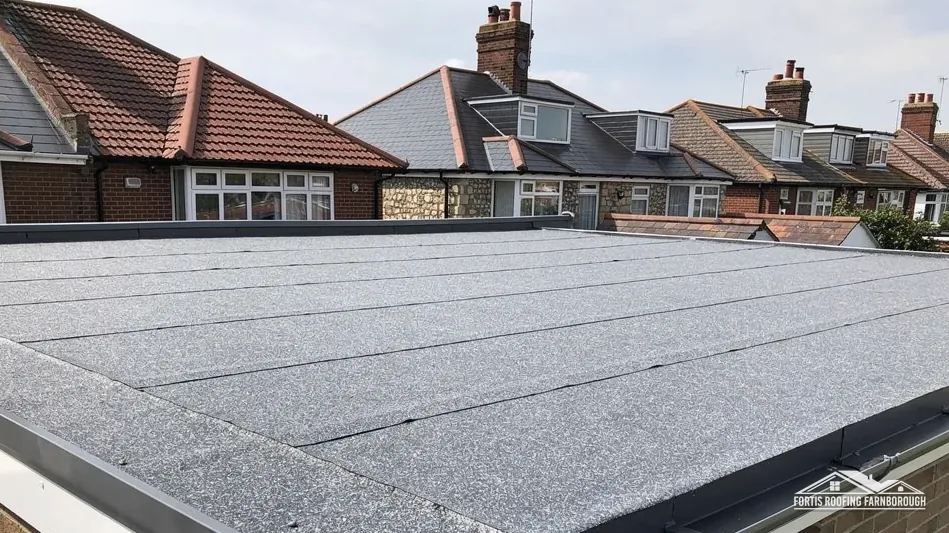
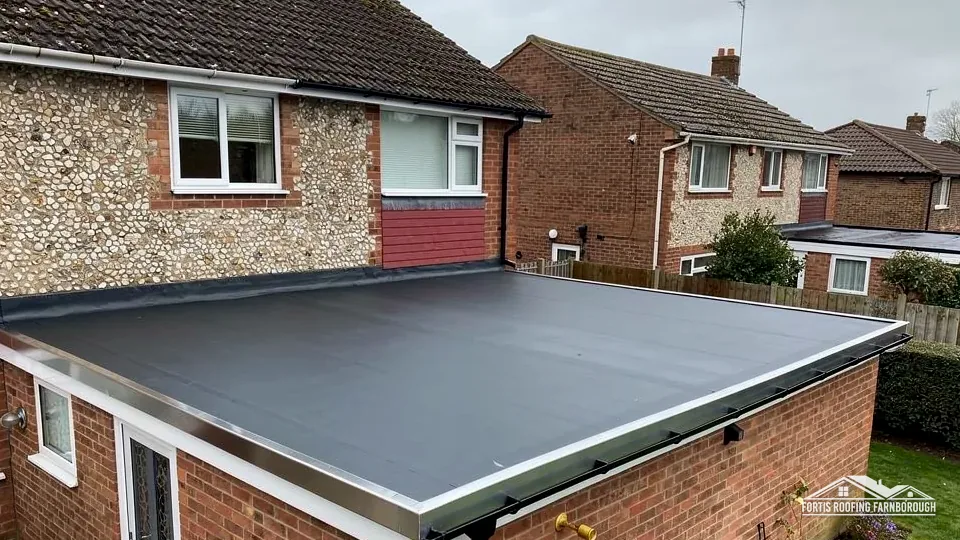
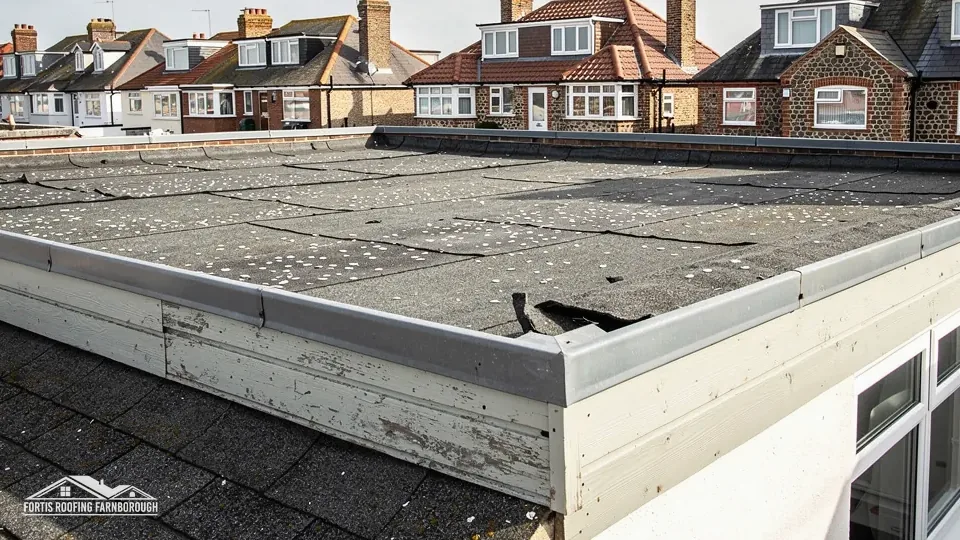
Planning law only regulates development. Section 55(2)(a) of the 1990 planning Act puts alterations that affect only the interior, or that do not materially change the exterior, outside the meaning of development. Stripping a worn felt covering and laying a new one of similar appearance sits comfortably within that.
Materials count. A change that is visible from outside, such as swapping a grey membrane for a bright green sedum surface, or adding a deep parapet or raised edge, may materially affect the appearance. If the look changes noticeably, ask your planning authority before starting.
Building Regulations are a separate system. A replacement flat roof covering is a matter for building control as well as planning, and the Planning Portal's guidance on re-roofing sets thresholds that decide when an application is needed. Our page on flat roof Building Regulations covers that side.
A repair keeps the same planning position. Patching a membrane, replacing an outlet or re-bedding an edge trim are all maintenance works.
For an ordinary flat roof on a house, a straight replacement therefore needs no application, subject to the exceptions below.
Class C and houses
Some roof works go beyond a like-for-like swap yet still need no application, because permitted development gives a national grant of permission. For a house, Class C of Part 1 of Schedule 2 to the General Permitted Development Order 2015 takes in alterations to the roof beyond those the other classes deal with.
The key limit in Class C is projection: 0.15 metres is the most the alteration may stand proud of the original roof plane, measured at right angles to the surface. A thicker insulated build-up on a flat roof that raised the surface by a little more than that would run into the limit, so check the finished thickness if you are adding insulation above the deck.
Class C also carries a condition for side roof slope windows, which must be obscure-glazed and, unless the openable parts are more than 1.7 metres above the floor, non-opening. On a flat roof that seldom arises, though it matters if you add a rooflight in a sloping side element.
Class C has no exclusion for conservation areas or National Landscapes, so it still applies there, but other permitted rights such as dormers do not. Dormers are not permitted development on article 2(3) land.
Planning permission is a different matter from Building Regulations, which still apply to the work.
Flats, listed buildings and Article 4
Flats do not share a house's permitted development. The Order's definition of a dwellinghouse excludes buildings containing flats and flats within them, and Rushmoor's guidance confirms that flats have none of those rights, so an application is needed once the work goes past a straight swap.
Listed buildings need extra care. They keep Class B and C permitted development, but anything affecting the character of a listed building also needs listed building consent under section 7 of the Planning (Listed Buildings and Conservation Areas) Act 1990. A flat roof on a listed property, or within its curtilage, should be discussed with the conservation officer before anything is ordered.
An Article 4 direction withdraws specified permitted development rights across a defined area. Roof-relevant detail exists only for some councils. Rushmoor's Cargate direction covers chimneys and flues, Hart's 1998 directions reach frontage roof slopes and chimneys in the areas they list, and Basingstoke and Deane's town-centre areas list roof changes. Everywhere else, check whether a direction applies with the council.
The council named for your address is the right authority. Rushmoor's planning pages are the place to start for Farnborough. If you are unsure, ask before you buy materials.
Getting a firm answer
The simplest route is to ask. Describe the work to your local planning authority: what is there now, what you propose and how it will look. If the answer is not clear, a lawful development certificate gives a binding decision that no permission is needed, at the cost of a fee and some time.
We help by establishing the facts. On a survey we measure the roof, note the existing construction and edges, and photograph the roof as it is, so you have an accurate description to give the council. We tell you where a proposed design would change the appearance or the build-up height.
You get a plain account of the roof, the options and the likely approvals, and one written price for the chosen work. If planning or listed building consent is needed, we explain what drawings or details are required and who normally prepares them.
This is information and not legal advice, and the council's decision is the one that counts. What we can do is make sure the roof you are offered does not drift into a planning problem by accident.
The flat roofing hub covers coverings and repairs, and converting a flat roof to a pitched one explains the larger case.