The short answer
Published lives differ by material. HomeBuilding gives clay 60 to 80 years, plain and Double Roman concrete 40 to 50, fibre cement 30 to 40 and Welsh slate 100 or more. The BRE minimum of 60 years belongs to clay alone. These are typical ranges, not guarantees, and an individual roof can fall either side.
Clay and slate
Clay is among the longest-lived tiles. Marley quotes the Building Research Establishment as giving clay roof tiles a minimum life expectancy of 60 years, and it is firm that the BRE figure is for clay only. HomeBuilding & Renovating (Sep 2025) lists clay at "60-80 years" in its supply-only table.
Slate lasts longer still. In the same HomeBuilding table, Welsh slate is "100+ years", Spanish natural slate "75-100 years" and reclaimed Welsh slate "50-80 years". Reclaimed slate has already served a roof, which is why its figure is lower.
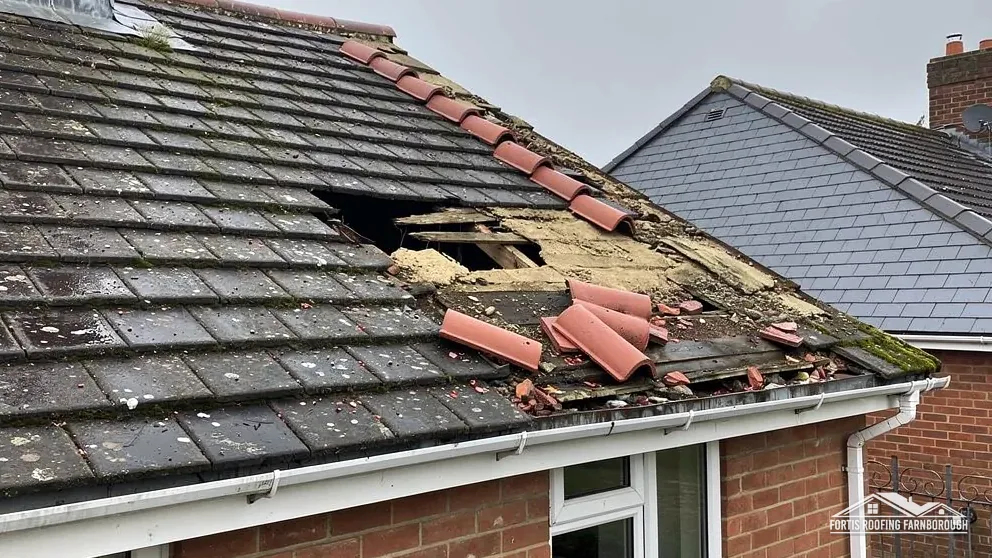
The figures describe the tile itself. They do not include what holds it. On clay and slate roofs, the nails and battens often fail first. Iron nails rust, slates slip and a roof still full of good tiles may only need new fixings. Our page on repairing a clay tile roof looks at how that goes.
Frost is the other agent, and it is hardest on tiles that are already porous or cracked. A tile that holds water can crack or shed its face over repeated freezes, and Met Office averages for South Farnborough (1991 to 2020) include around 53 air-frost days. Quality varies, and a softer or thinner tile will not reach the upper end of any range.
Concrete and fibre cement
Concrete tiles are where the published figures part company, so both are given. Marley expects its roof tiles to give around 60 years, and stresses that this is not a promise of any kind. HomeBuilding gives plain concrete tiles "40-50 years" and Double Roman tiles "40-50 years".
The gap between 40 to 50 and around 60 is real. One is a maker's expectation and the other is a cost guide's supply table. The figures cannot say which will be right for your roof, and it is fair to plan on the shorter range and be pleased if the tiles last longer.
The BRE minimum is sometimes repeated as if it covered every kind of tile, and it covers one kind.
Fibre cement tiles, often sold as an Eternit-type tile, are given "30-40 years" by HomeBuilding. They are the shortest-lived of the group in that table. Some older fibre cement products have a separate asbestos question, and a roofer should check the age and type before disturbing them. Our page on interlocking versus plain tiles explains how the tile families differ.
Ranges are not guarantees
A lifespan is the range a material usually reaches in ordinary conditions. A warranty is a written promise from whoever supplied or fitted the work. The two are different things, and only an inspection tells you about your own roof.
What actually decides the life of a tiled roof is a mixture of factors.
- The quality and thickness of the tile when it was made.
- The pitch, because a tile laid flatter than its stated minimum lets water creep under it.
- The condition of the underlay and battens below.
- The fixings, whether nails, clips or mortar bedding.
- Ventilation, which keeps the roof space dry.
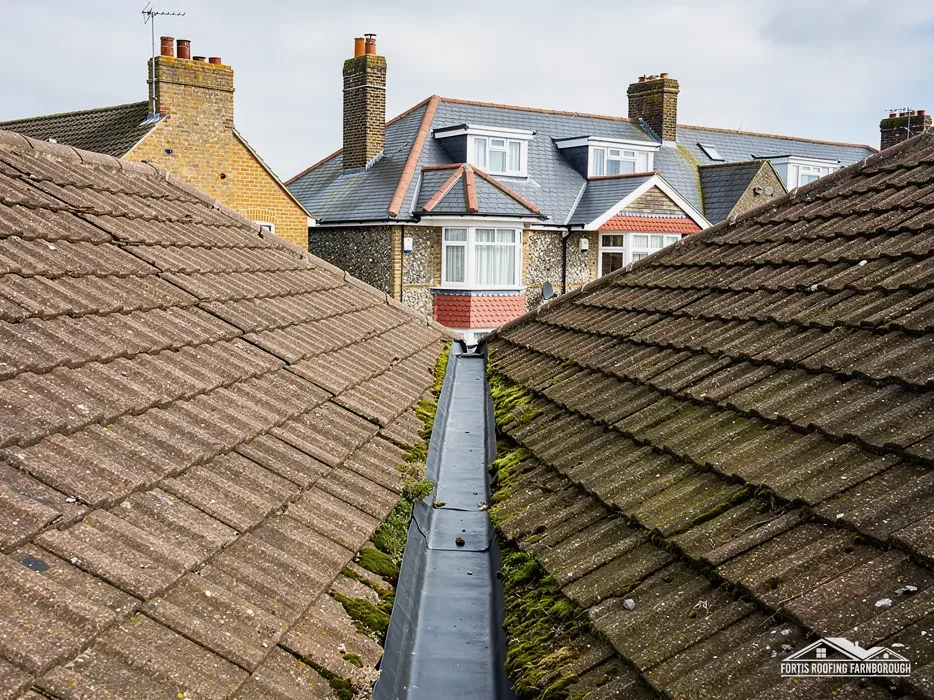
- Moss and debris that hold water against the surface.
- The care taken when anyone walks or works on it.
Any one of these can shorten a roof's life far below the table. A well-built roof on a sound structure can reach the top of a range.
So the figures answer a different question from the one most owners ask. They tell you roughly when a material has a good chance of being past its best. They do not tell you that the roof will fail at 40 or last to 80. The roof itself does that.
Judging your own roof
Age is a start. Find out when the roof was laid, if you can, and what the tile is. Paperwork from the purchase, or a neighbour with the same roof, can narrow it down.
Then look at condition. Tiles flaking, crumbling or covered in thick moss, many slipped or cracked tiles, sagging lines in the slope and daylight in the loft are signs that a covering is tiring. A few slipped tiles on an otherwise sound slope are not.
The question to ask is whether a repair will buy the time you want, or whether the covering is near the end. A roof 40 years old with sound tiles and failing nails is a different case from one with crumbling tiles.
The survey measures the roof and takes photographs of the slope and of the roof space, and the evidence is explained: a repair where that is enough, a re-roof where the roof points to one. The quote is a single total. Our page on roof tile replacement cost has typical UK figures, and the pitched roofing hub lists the other tiled-roof work we handle near Farnborough and Fleet.