The short answer
A roof lantern is a raised glazed structure with sloping sides that stands proud of a flat roof and lets light in from several angles. A flat rooflight is a low, glazed panel set on a kerb. Both sit on an upstand and are held to the same Part L figure of 2.2 W/(m²·K), so the choice rests on light, appearance, price and upkeep.
How each one gathers light
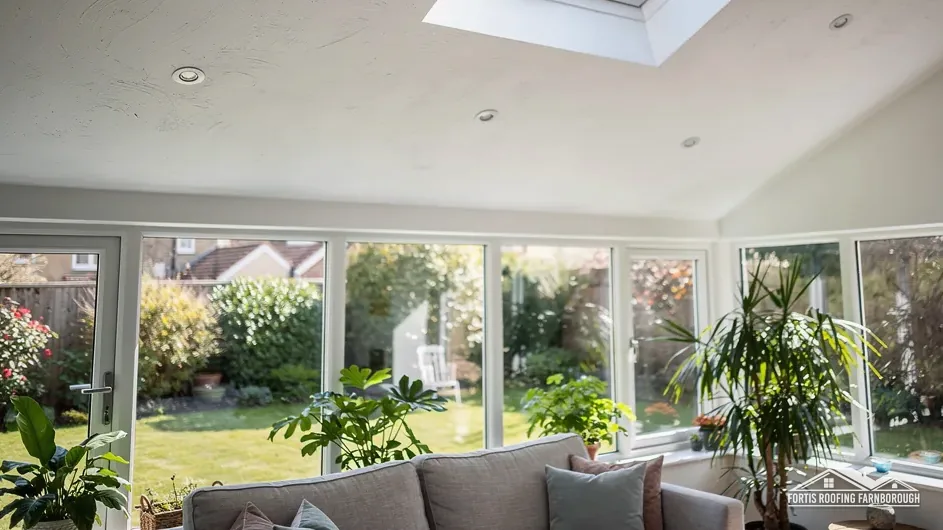
A flat rooflight is a pane, or a pair of panes, laid close to the plane of the roof. It admits light from straight overhead, so the room gets its brightest patch where the sun is high, and less when the sun is low. The glass is usually fixed or has a small opening vent. It is the simplest form and the least conspicuous from the garden.
A roof lantern is a small glazed building. Its sides slope up to a ridge or a pyramid point, and the glass catches light from several directions across the day. It looks like a feature from inside and out, and it lights the middle of a deep room more evenly. Lanterns also give extra ceiling height at the centre, which suits a kitchen extension or a hallway.
The trade is bulk. A lantern is taller, heavier and more visible. It can alter the look of a house from the street or from neighbouring windows, and that can matter for planning if you live somewhere with controls on roof alterations.
Our guide to the flat roof rooflight covers the standard types in more detail. The right form comes from the room, the roof and the budget, not from a rule.
What drives the cost
A lantern costs more than a flat rooflight of the same footprint, because there is more of it. It has more glass, a frame with several joints, a structural base and often a larger crane or hoist to lift it into place. A flat rooflight is lighter, simpler and easier to handle.
Both types respond to the same price drivers: the size of the opening, the quality of the glazing, the frame material, any opening vent or remote control, the structure beneath that has to carry or frame the opening, and the access. A big lantern may need extra support in the roof. Access equipment and the time to fit the upstand, the membrane and the lining are the same whichever you choose.
The survey and the choice of unit set the price of a particular product. A cheaper product is not always the cheaper job if it needs more work to fit, and a high-quality frame costs more than a basic one but wears better.
The written total names the unit in its scope, so the figure refers to a specific model and finish, and a second quote can be set beside it on equal terms.
U-values and the Part L figure
Replacement rooflights in an existing home are covered by Approved Document L. Table 4.2 limits a rooflight to 2.2 W/(m²·K). That is a U-value, and a lower one means less heat loss. Roof windows follow their own standard, so keep the two apart. Until the 2026 edition takes effect on 24 March 2027, the 2021 edition applies.
Both a lantern and a flat rooflight can reach 2.2 if the glazing and the frame are good, and a poor one of either type will miss it. The data sheet gives the figure for the whole unit, and that is the number to compare. Lanterns have more frame and more joints, so a lantern needs a well-made frame with thermal breaks to perform as well as a flat unit with the same glass.
The upstand under the unit is held to a limit of its own. The same document caps a site-built upstand at 0.35 W/(m²·K). That kerb is part of the performance, and it is often the weakest link on an older roof.
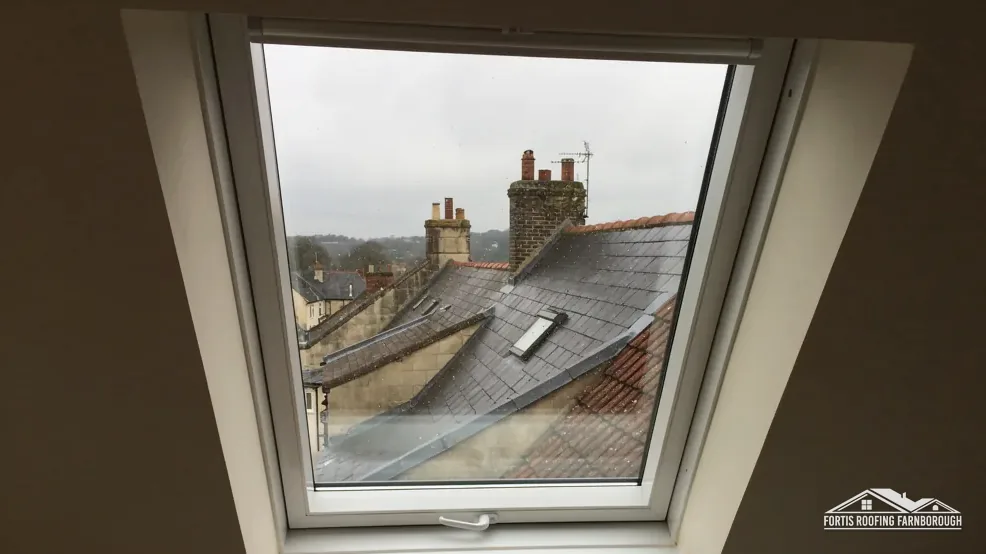
Under the Building Regulations 2010 neither product is a thermal element, whereas the roof beside it is. Our answer on whether a roof window fits any roof sets out the distinction.
Upstands, maintenance and the long view
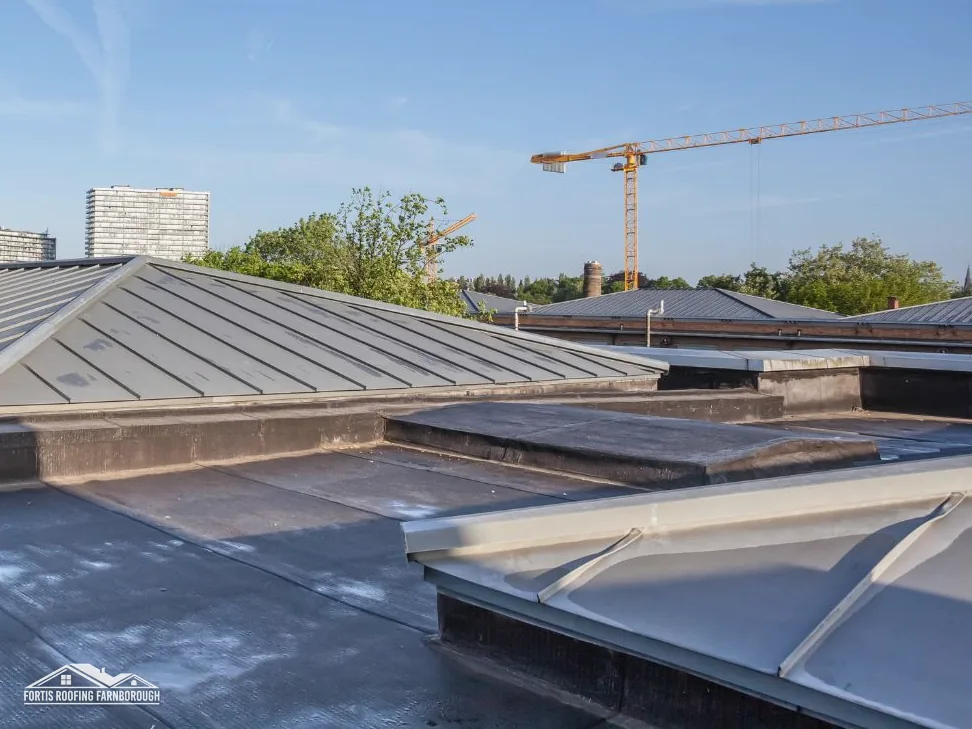
Both types stand on an upstand, a raised kerb around the opening. The waterproofing, in EPDM, GRP, felt or lead, rises up the face of the kerb and is sealed there, with the unit sitting on top. A good kerb is high enough to keep standing water away, is insulated, and is sound. BS 6229:2025 keeps a finished fall of 1:80 for flat roofs up to 10 degrees, so water should run away from the unit and not pool beside it.
Maintenance differs in small ways. A flat rooflight collects leaf litter and dirt on its glass, which sits almost horizontal, and needs washing more often. A lantern's sloping sides shed more, though it has more joints and corners to inspect. Both need their seals checked and their drainage kept clear.
Condensation is a risk for either. A cold glazed surface above a warm room will mist unless the unit is well insulated and the room is ventilated. Our answer on condensation on a roof window covers the causes.
We survey the roof, check the upstand and the membrane, and show you photos of what is there. Where the covering is old, doing the rooflight with the roof saves paying for access twice. See roof windows and skylights for the rest of the service.