Brake's Fleet Road plots
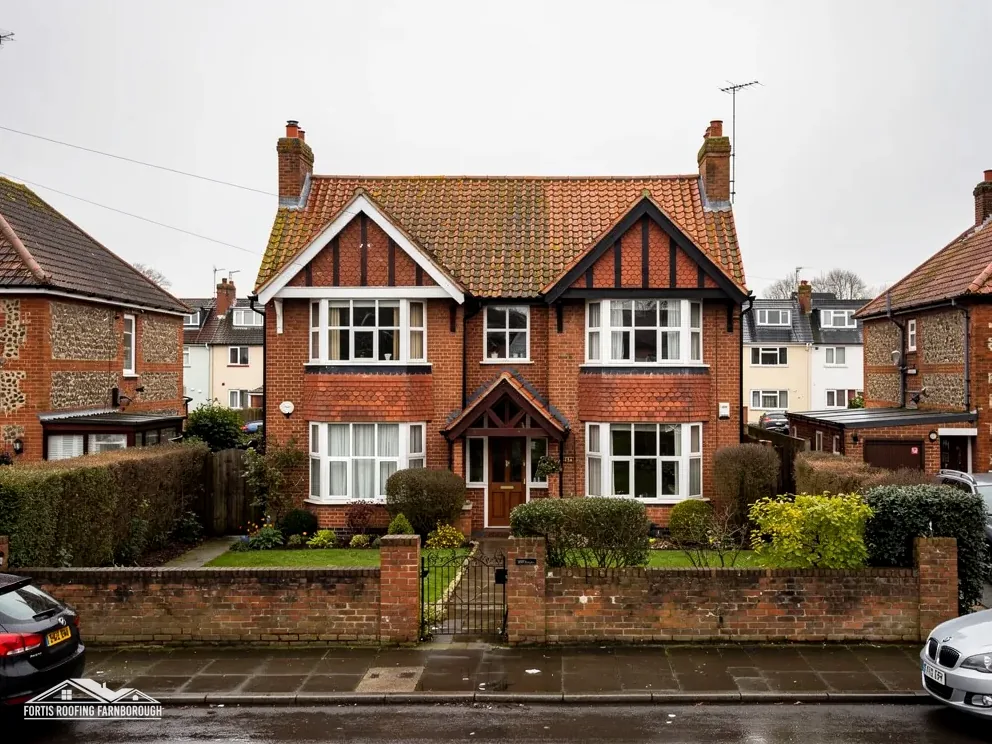
Hart's appraisal says growth came after the 1880s, when H W Brake mapped plots around Fleet Road.

Roofs on Brake's plots and North Fleet's 1890 to 1922 streets
Fleet grew out of heathland after the 1880s, when H W Brake mapped building plots around Fleet Road. We survey those roofs, and the newer ones, slope by slope.
Hart's appraisal says growth came after the 1880s, when H W Brake mapped plots around Fleet Road.
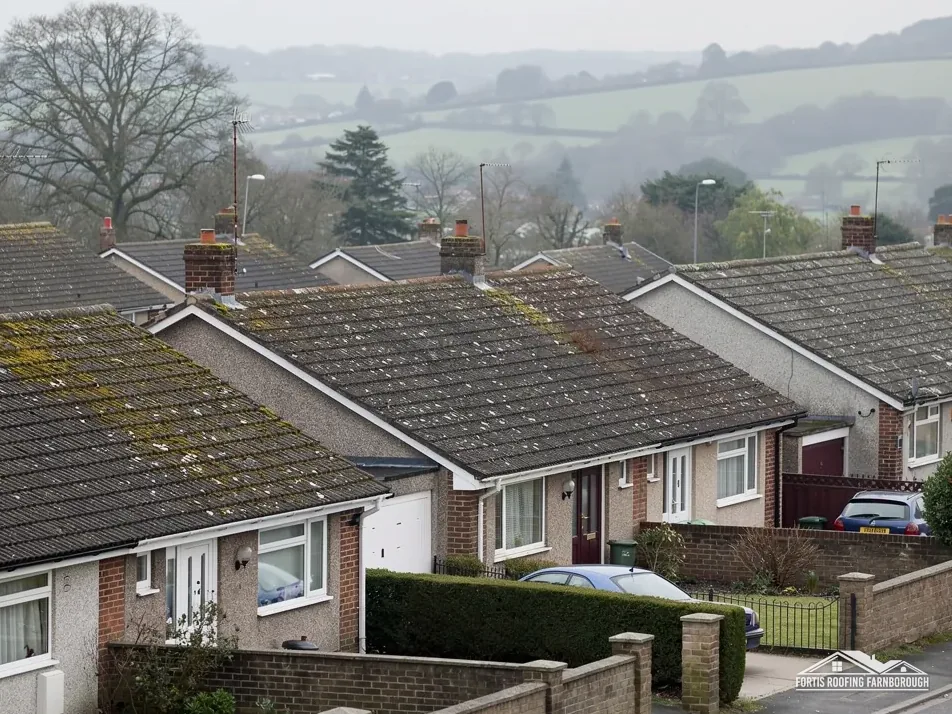
Hart dates most conservation-area buildings 1890 to 1922 or later; some streets were finished in the 1930s.

North of the conservation area, Brickyard Plantation marks where local clay was once dug for bricks and tiles.
Map of Fleet with Elvetham Heath, Church Crookham, Crookham Village, Southwood marked around it.
Map data © OpenStreetMap contributors. Loads only when you ask for it.
Elvetham Heath and Hartley Wintney lie to the north-west, Church Crookham and Ewshot to the south, Crookham Village to the south-west, and Farnborough to the east.
About 5.7 road miles west of Farnborough · Hart District Council and Hampshire County Council.
Fleet, the local record
Who regulates roof work in Fleet, what Hart District Council records about how its streets were built, and how the conservation areas and listed buildings shape a repair, each figure with its published source.
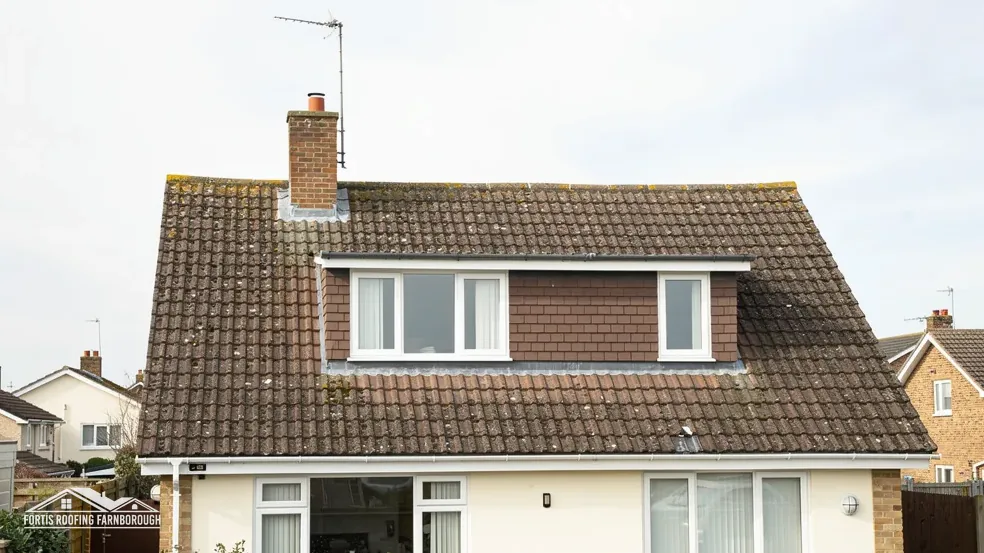
| No. | Chapter | The figure it turns on |
|---|---|---|
| 01 | Who signs off roof work in Fleet | Hart plans, Hampshire licenses scaffold |
| 02 | How Fleet grew from heath to town | 23,485 residents in Fleet parish |
| 03 | North Fleet's conservation area and All Saints | All Saints, Grade II*, by faculty |
Chapter 01 of 03
| Role | Body for Fleet addresses |
|---|---|
| District council and planning authority | Hart District Council |
| County council and highway authority | Hampshire County Council |
| Building control | Hart and Rushmoor Building Control Partnership |
| Scaffold licence on the highway | Hampshire County Council; the scaffold firm applies |
| Town council | Fleet Town Council |
Fleet sits in Hart, inside Hampshire's two-tier system of local government. Hart District Council is the planning authority for Fleet addresses, and the highway authority for its roads and pavements is Hampshire County Council. Fleet is 5.7 road miles west of Farnborough, measured from the A325 Farnborough Road, so the town is close enough that the same councils and the same building control team sit behind a Fleet job as behind many of the roofs we survey at home.
Hart does not run a building control service of its own. Its pages say building control is supplied by Rushmoor, under a shared service the two councils formed in July 2015 as the Hart and Rushmoor Building Control Partnership. For a Fleet homeowner it comes down to this. Replacing a few slipped tiles or re-bedding a ridge is a repair, and sits well inside the Planning Portal's limits. A full re-roof goes past them, and then the partnership or a registered building control approver is involved before the work is signed off.
If you are unsure which side of that line your job falls on, the survey answers it. Our photos and measurements show how much of the roof is affected, and that is the figure building control asks about first. If the job does need an application, we tell you before any work is booked, and the timing is built into the plan we give you.
Scaffold set up on a Fleet pavement or road is licensed under section 169 of the Highways Act 1980 by Hampshire County Council, as the highway authority. Hampshire County Council puts that application on the scaffolding firm, which applies for its customers, so the paperwork is not yours to chase. Scaffold standing on a private drive or garden needs no licence at all. We agree the scaffold layout with the scaffold firm at the survey, so that the access suits the roof and keeps the footway in front of the house usable.
A Fleet roof that needs only a ladder or a tower for a small repair skips most of this. The table matters for the bigger jobs: re-roofs, chimney rebuilds and long runs of gutter, where scaffold on the front of the house is the only safe way up. On those jobs the scaffold goes up first, the roof work follows, and you are told what is happening each day until the last pole comes down.
Chapter 02 of 03
Fleet in four published figures
Hart's appraisal of North Fleet sets out how young the town is. It describes Fleet as largely uninhabited heath before the railway came in the 1840s. The main growth followed the 1880s, when H W Brake bought most of the land and mapped out building plots around Fleet Road, and Fleet Urban District Council followed in 1904. The 2021 Census counted 23,485 usual residents in the civil parish of Fleet.
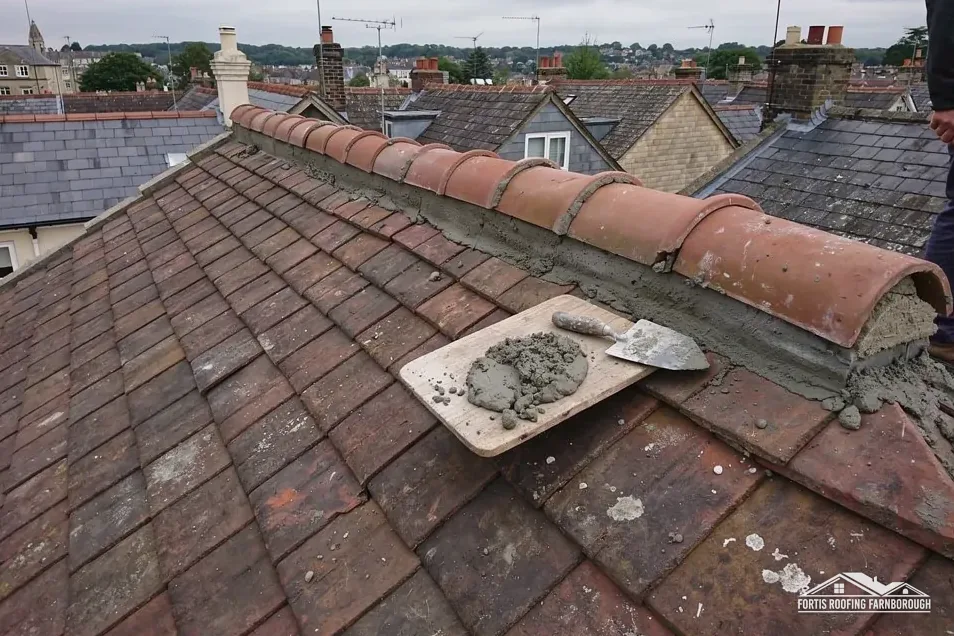
Hart dates most of the buildings in the North Fleet conservation area to between 1890 and 1922 or later, with some streets not completed until the 1930s. A house from those years has had a century or more of weather on its roof, and it may have been re-covered since. So the covering on a Fleet house of Brake's era may be its first, a later replacement, or a mix of the two across front and rear slopes. We never assume which. On the survey we name the covering on each slope from what we lift and photograph, and that decides how a repair is matched.
The appraisal also notes Brickyard Plantation, north of the conservation area, as the place where local clay was once dug to make bricks and tiles. That is a reminder that tile and brick in this part of Hart were once made close to where they were laid. It does not tell us what any one house carries today, which is why the survey looks before it prices.
Where a Fleet house shares its roof with the house next door across a party wall, a repair on one side can show the state of the other, so we photograph the junction at the party wall and tell you what we can see of the neighbouring slope, without stepping onto it. If the neighbouring roof needs work too, that is a conversation for you and your neighbour, and our photos give you both the same picture to start from.
Fleet Pond, beside the town, is described by Hart as the largest freshwater body in Hampshire, with a nature reserve of 141 acres. Trees and open water close to houses mean leaves in gutters and valleys, so clearing them is part of looking after a Fleet roof. Our pitched roofing page explains how slates, tiles, ridges and valleys are repaired, and our roof replacement page covers a full re-roof when the covering is worn out.
Chapter 03 of 03
| Designation | In Fleet | For roof work |
|---|---|---|
| Conservation area | North Fleet | Changes to the look checked with Hart |
| Conservation area | Basingstoke Canal | Changes to the look checked with Hart |
| Article 4 direction (1998) | North Fleet | Front boundaries only: gates, fences, walls |
| Grade II* listed church in use | Church of All Saints (NHLE 1339861) | Church of England faculty, not listed building consent |
| Grade II listed | Fleet War Memorial (NHLE 1457019) | Listed building consent for works affecting its character |
Two conservation areas touch Fleet: North Fleet, and the Basingstoke Canal conservation area that follows the canal through Hart. A conservation area does not stop a roof being repaired. Hart's own wording is that repairs to non-listed buildings need no planning permission provided they follow the precise details of the original elements involved and use the same materials. That is the test a like-for-like roof repair in North Fleet is held to. Hart also publishes a character appraisal for North Fleet, setting out what gives its streets their character, and it is worth reading before any change that alters the view from the road. On a roof that usually comes down to the covering, the ridge profile, the chimney stacks and the verge details, so we leave those as they are unless the planning team agrees a change.
Hart decided in 1997 to apply Article 4 directions to most of its conservation areas, and the 1998 directions on many of them reach frontage roof slopes and chimneys. North Fleet is the exception: Hart lists its direction as covering front boundaries only, meaning gates, fences and walls. For a roof in North Fleet the question is therefore the general conservation-area one. If a job would change how the roof looks, such as a new covering material or a different ridge, we check with Hart District Council's planning team before we price it.
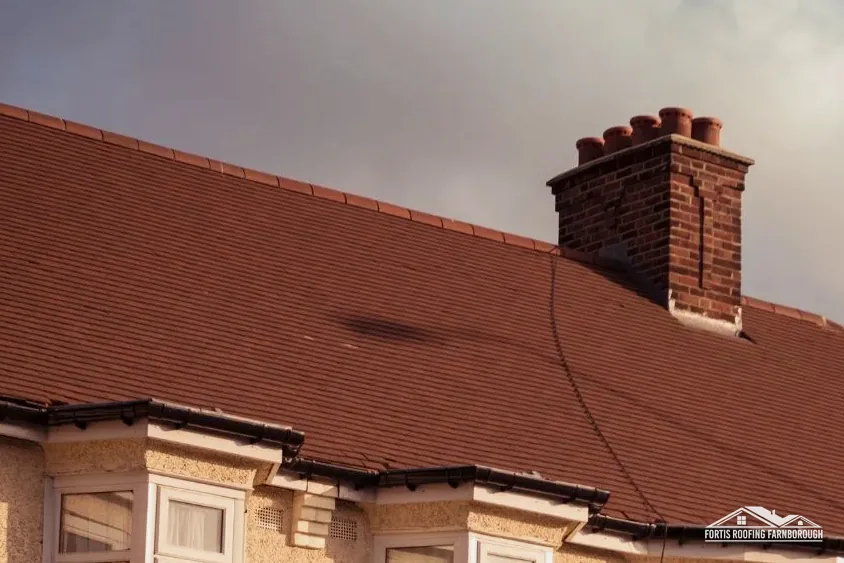
The Church of All Saints is listed Grade II* and is North Fleet's only listed building. It is a Church of England church that remains in use, so roof work on it goes through the faculty system under the ecclesiastical exemption, not listed building consent from Hart. Fleet War Memorial is listed Grade II, and work affecting its character needs listed building consent in the usual way. Neither changes anything for the houses around them, but both shape how a roofer approaches work near them.
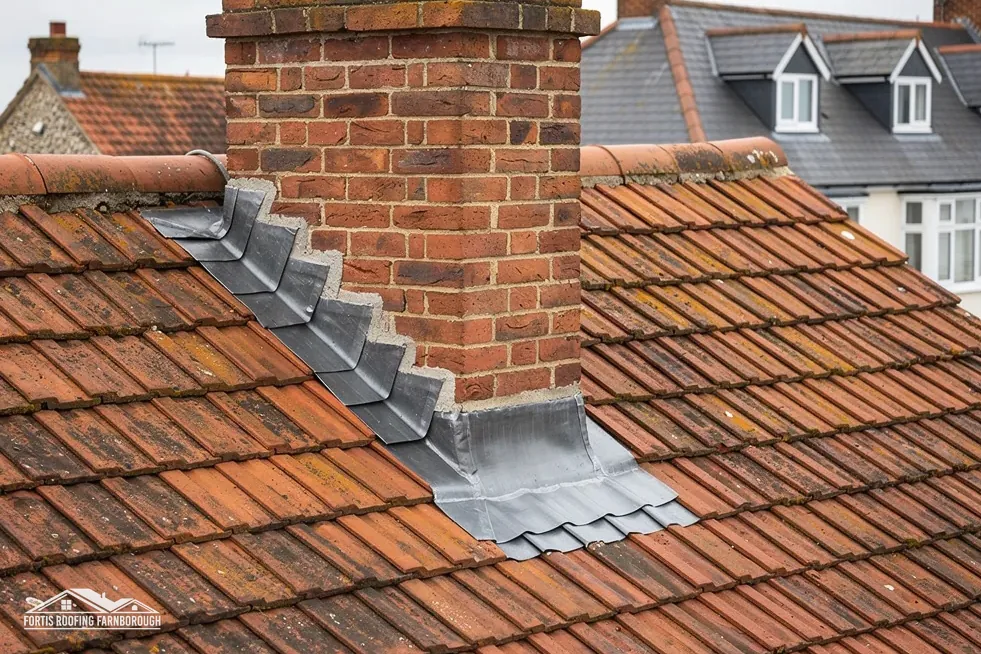
For houses in either conservation area the practical work is the same as anywhere: slipped tiles refixed, ridges re-bedded and mechanically fixed, and lead renewed in the right code. Our lead roofing and lead work page explains how flashings and valleys are renewed on older roofs. The difference here is the record we keep, so that a repair can be shown to match the original.
Not for a like-for-like repair carried out in the traditional way with the same materials, which Hart says needs no planning permission on a house that is not listed. A change to how the roof looks, such as a new covering material, is a different matter, and we raise it with Hart's planning team before pricing it.
No. A handful of slipped or cracked tiles sits well inside the Planning Portal's test of less than 25 per cent of the building envelope and less than 50 per cent of the roof. A full re-roof goes beyond those limits, and then the Hart and Rushmoor partnership or a registered approver is involved.
No. All Saints is listed Grade II*, but it is a Church of England church that remains in use, so the ecclesiastical exemption applies and roof work goes through the faculty system instead. Listed building consent from Hart District Council is the route for listed buildings outside that exemption, such as the Grade II war memorial.
For Fleet the highway authority is Hampshire County Council, and its rule is that scaffolding companies apply for the licence on their customers' behalf. You do not deal with the council yourself. The scaffold, with its licence where one is needed, is included in the one written price we give after the survey.
Get your free roof quote
Tell us your Fleet street and what you have noticed, and we will arrange a survey and photograph the roof.
10-year workmanship guarantee, in writing.