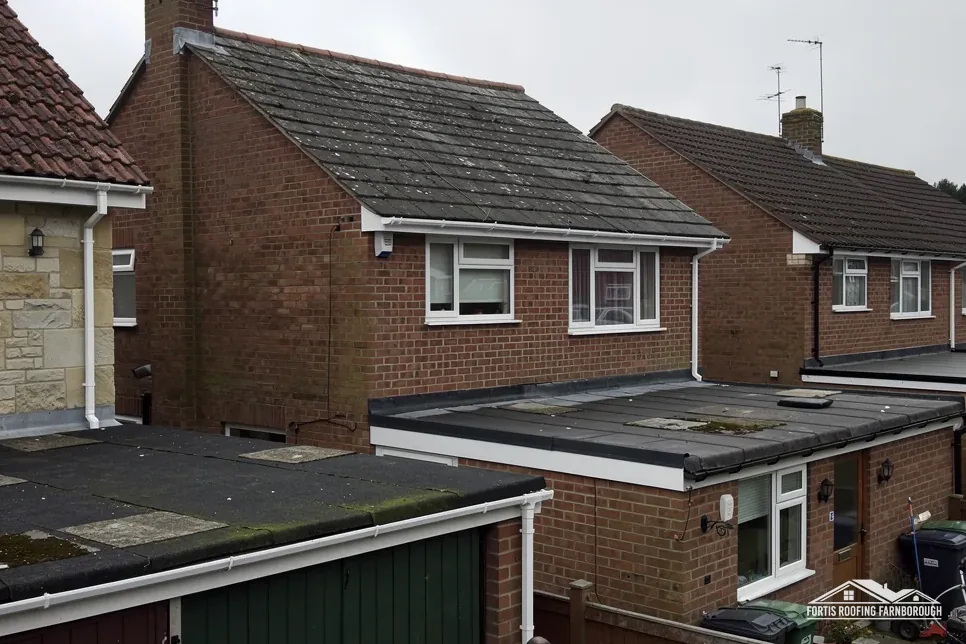
William Cobbett's farmland
The reformer William Cobbett farmed land at Normandy, and a Wesleyan chapel stood there by 1911.
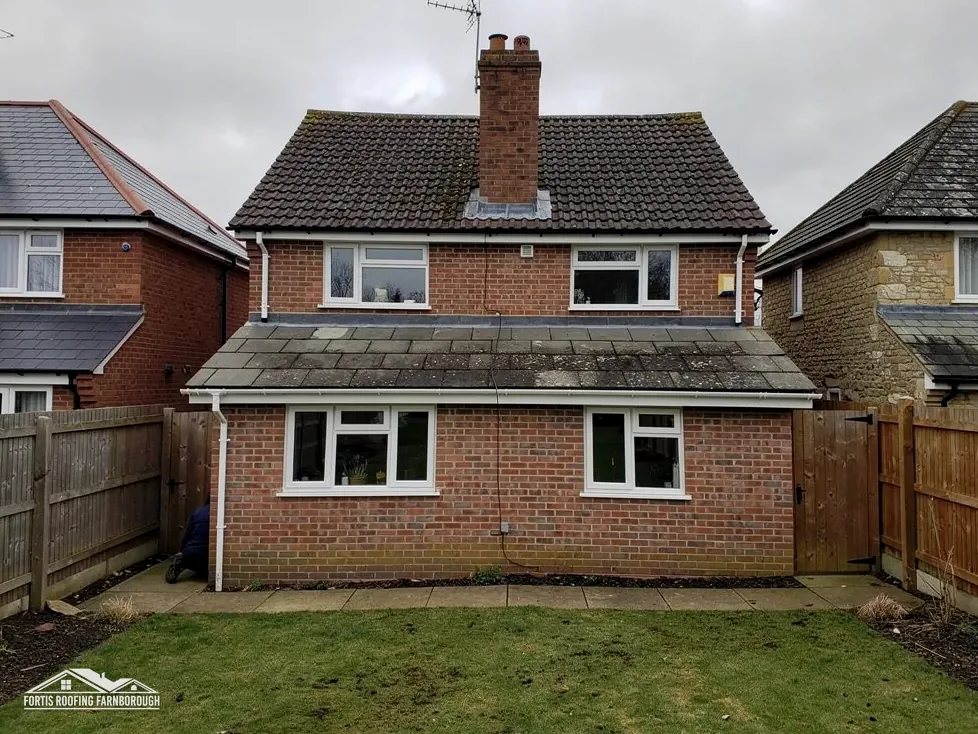
Roofs along the A323 and Glaziers Lane, below the Hog's Back
Normandy is a scattered village on the A323 between Guildford and Ash, where William Cobbett once farmed. Each roof is photographed, measured and quoted once.
The reformer William Cobbett farmed land at Normandy, and a Wesleyan chapel stood there by 1911.

Normandy is scattered along the Aldershot Road and Glaziers Lane, low-density and one row deep.

Halsey Cottage, Longer End Cottage and Normandy Hill Cottage are all listed Grade II.
Map of Normandy with Wood Street, Ash, Puttenham, Ash Vale marked around it.
Map data © OpenStreetMap contributors. Loads only when you ask for it.
Wood Street lies to the east, Ash to the west, Puttenham to the south, Ash Vale to the north-west, and Pirbright to the north-north-east.
About 6.2 road miles south-east of Farnborough · Guildford Borough Council and Surrey County Council.
Normandy, Cobbett and clay
What published histories and Guildford's own profile say about Normandy, which listed cottages and conservation areas lie close, and how a roadside village affects scaffold and access. All figures are sourced.
| No. | Chapter | The figure it turns on |
|---|---|---|
| 01 | Cobbett's farm, Wyke church and a one-row-deep village | St Mark's 1847; Wyke School 1874 |
| 02 | Halsey Cottage, two other listings and a chimney rule | Three Grade II cottages; seven listings |
| 03 | A323 frontage, Surrey's licence and the 2027 changeover | A323 frontage; licence 28 days |
Chapter 01 of 03
Normandy and Wyke in dated records
Normandy's story begins with farming. The reformer William Cobbett farmed land here, and by 1911 there was a Wesleyan chapel in the village. The same county history records the stone church of St Mark at Wyke, with its belfry, erected in 1847 when Wyke was carved out of Ash, Worplesdon and Wanborough as an ecclesiastical parish, and Wyke School followed in 1874. Guildford's own settlement profile describes the village as scattered along the Aldershot Road and Glaziers Lane, low-density and only one row deep.
The profile adds that road-side settlement on this clayland, sometimes tied to railway stations as at Flexford, began in the mid to late 19th century and has been infilled and intensified since. Neighbouring Flexford's homes were mostly built in the late 1950s. A village that grew along its roads in stages and has been infilled since will have roofs from many periods standing side by side, and a plot that was once a single house may now hold two.
Such a history suggests variety, and a reason to treat each house as itself. Our approach starts at the outside: we look at each slope from the ground and from above, measure it, and photograph every ridge, hip, verge and valley. We then go inside to look at the underside of the covering, and finally work through the rainwater route from gutter to ground.
A house standing one row deep along a main road gets road dust, vibration from traffic and, on the A323, the noise that goes with it. Whether any of it harms a roof is not something we assert, but it shapes how you live with a job: where materials are delivered, how long a lane is blocked, and when noisy work can sensibly be done. We talk through those practicalities at the survey.
Our pitched roofing page explains how failing slopes are repaired, and our roof replacement page describes the work when a covering has run its course.

Where plots have been infilled, a house and its neighbour may be built to quite different standards, and a roof added in the 1980s may sit beside one from the 1880s. If a leak shows in the older roof, the cause is sometimes a junction with the newer one, and we photograph the join between the two with particular care.
Chapter 02 of 03
| Entry | Status | For roof work |
|---|---|---|
| Halsey Cottage | Grade II, NHLE 1188357, listed 13 December 1984 | Listed building consent |
| Longer End Cottage | Grade II, NHLE 1188368 | Listed building consent |
| Normandy Hill Cottage | Grade II, NHLE 1029656 | Listed building consent |
| Wanborough conservation area | Within about 2.5 km | Check your address with Guildford |
| Wood Street conservation area | Within about 2.5 km | Check your address with Guildford |
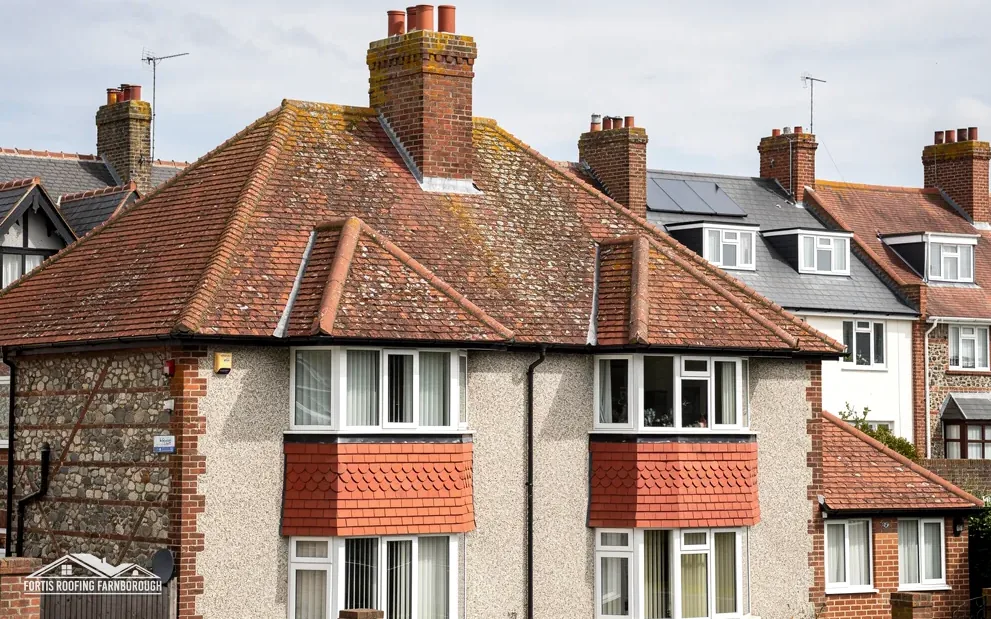
7 listed buildings stand within 500 m of Normandy's centre. Three are named in the village's record: Halsey Cottage, first listed on 13 December 1984, Longer End Cottage and Normandy Hill Cottage, all Grade II. Work that would change what makes a listed cottage special needs listed building consent beforehand, whereas a house nearby without a listing is not caught by it. The national dataset names two conservation areas within about 2.5 km, Wanborough and Wood Street, and neither touched the 1.5 km box drawn around the village centre.
Guildford's conservation pages describe how it uses Article 4 directions: inside one, a chimney stays as it is unless permission has been obtained, and certain frontage works are treated the same way. Owners are pointed to the council's map, with its Article 4 layer switched on, to see whether their address is affected. We consult that map so that no stack job is priced blind, because a chimney is exactly the feature a direction can reach, and the answer should come before a price and not after one.
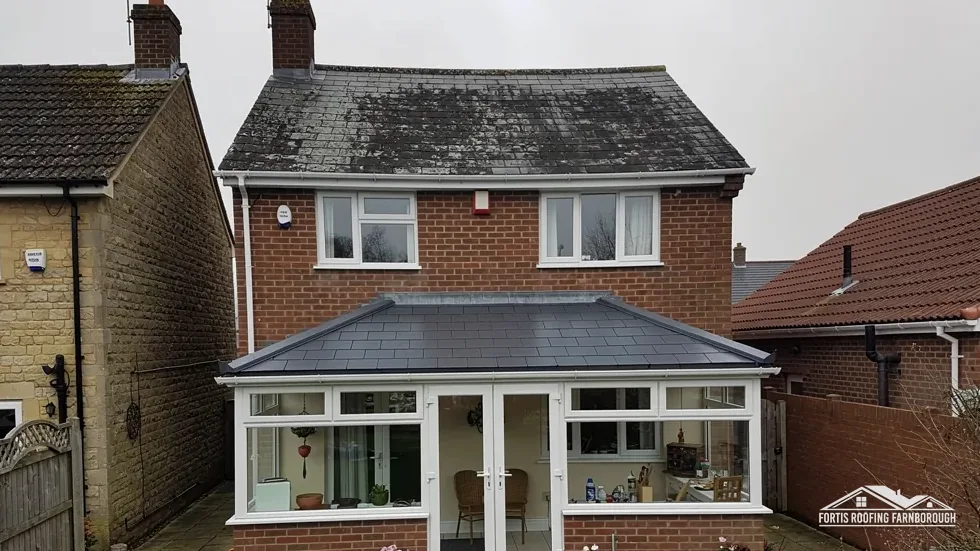
Small cottages bring their own demands: steep pitches, tall chimneys and little roof area to work with, often reached by a narrow path. The price rests on a measured area, so we measure carefully, and photograph the chimney stack from the top and every junction with the wall. Should a listed cottage need work, the planning officer will want the photographs, and the repairs a stack may need are set out on our chimney repairs page.
Wooded heath and clay below the Hog's Back means trees near roofs, and leaves in gutters. A cottage under trees needs its gutters cleared more often than one in the open, and we note where overhanging branches threaten the covering. Where they do, we tell you, and leave the decision on trees to you and, where relevant, the council.
When a cottage roof is repaired, the work is small but the detail is fine. Old tiles are sorted and kept for re-use, replacement tiles are matched against them, and lead flashings are renewed to the right code where they have failed. Each stage is photographed. For a listed building, the same photographs go to the planning officer with the consent application, so the officer sees what was there and what is proposed on one page.
Chapter 03 of 03
Four facts for a roadside Normandy roof job
A good number of Normandy houses front the A323 or Glaziers Lane directly, which makes the question of where a scaffold can stand a real one. If poles will sit on the pavement or carriageway, Surrey County Council's licence is needed: £208 for each 28-day period, with 10 working days of notice wanted. Its page leaves the applicant unnamed; sorting that out falls to the scaffolder and ourselves, and written dates follow. If the scaffold can stand entirely on your own forecourt or drive, no licence is needed at all.
Ahead of the job, the scaffold's position is fixed with you, along with how deliveries reach the house and when the road is likely to be busiest. During it, the roof is covered whenever work stops, the site is kept tidy as we go, and each evening's position is explained to you. After it, the report records what was done, with photographs of the finished work.
Guildford Borough Council runs building control itself and handles any job that needs inspection; going private means a registered building control approver. Neither is needed for a handful of refixed tiles. A re-roof stays outside the Planning Portal's net while it touches under 25 per cent of the building envelope and under 50 per cent of the roof. Any covering at least 15 per cent heavier than the old requires approval, with an engineer's check first.
From 1 April 2027 the two Surrey councils named above are succeeded by West Surrey Council. Should your job span that date, we establish who then holds each question and let you know before the poles go up. Our roof replacement page explains what a full job involves.
Frontage roofs close to the pavement deserve extra care with safety. People walk, cycle and push prams past, so we agree a safe route round or under the scaffold, fence off any deliveries and clear waste as we go instead of letting it build up. Garage and porch roofs at the front are low enough to reach from a ladder, and they are often the first to show gutter trouble, so we include them in the survey.
Weather matters to a roadside job. The Met Office's South Farnborough averages for 1991 to 2020 show 118 wet days a year, so a licence of 28 days will meet some rain. We leave spare days in the plan and warn you early if the forecast threatens it.
Only if the poles have to stand on the public footway or the carriageway. Surrey County Council's licence is then needed, at £208 per 28-day period with 10 working days of notice. Where the scaffold fits entirely on your forecourt or drive the scheme does not apply, and plenty of small repairs are done from a ladder or low platform.
Halsey Cottage, Longer End Cottage and Normandy Hill Cottage hold Grade II listings, so listed building consent is the route where work would change their character. An unlisted house nearby is outside those listings. Which case yours is appears on the National Heritage List and in Guildford's maps, and the survey looks at both.
Both appear on the national dataset within about 2.5 km, yet the 1.5 km box round the village's place point reached neither, so they count as nearby. Guildford alone can say whether your address sits inside a conservation area, and we ask before pricing work that alters a roof's appearance.
Work that needs inspection goes to Guildford Borough Council's own building control service, or to a registered approver for anyone going private. West Surrey Council succeeds Guildford and the county from 1 April 2027. A job that straddles that date prompts us to trace the new holder of the file, and we report back to you.
Get your free roof quote
Name your Normandy road and the trouble you have seen. A visit is arranged, and one written price comes after it.
10-year workmanship guarantee, in writing.