The short answer
It depends on the system. Published ranges run from 10 to 15 years for felt, up to 100 years or more for metal roofing, with single-ply membranes, GRP and fibre cement in between. These are typical ranges from named sources, not promises, and regular inspection and maintenance decide whether a roof reaches the top of its range or falls short.
Membranes and flat-roof systems
Most commercial flat roofs are covered in one of a handful of systems, and the sources that publish lifespans do not all agree. Where two sources differ, both figures appear here so you can see the spread.
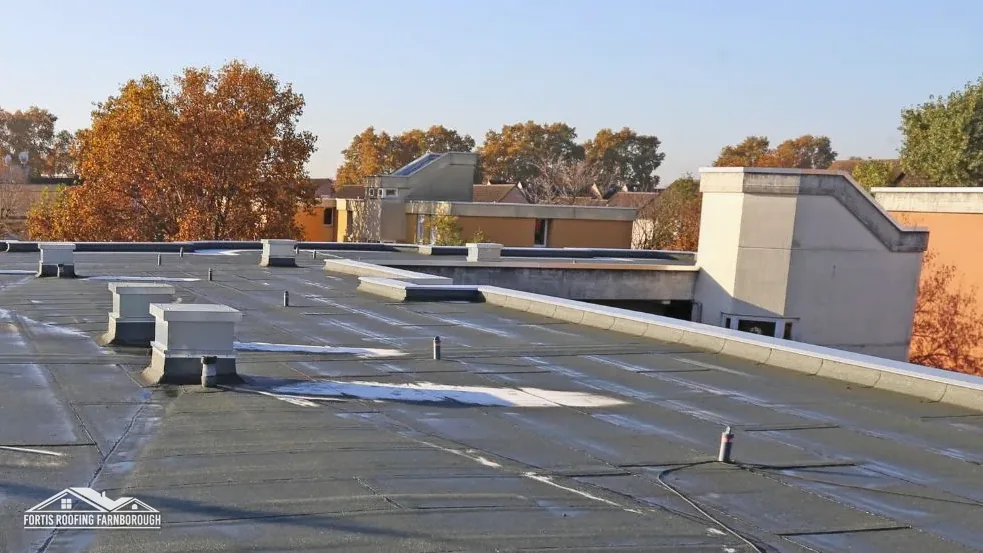
For EPDM, the synthetic rubber sheet widely used on larger flat roofs, HomeBuilding gives "25-30 years" and Less gives "30 to 50 years". For GRP, the glass-reinforced plastic often called fibreglass, HomeBuilding says "25-30 years" and Less "25 to 40 years". Built-up felt is shorter lived, at "10-15 years" from HomeBuilding and "10 to 20 years" from Less.
The overlap tells you what is realistic. A felt roof at 15 years is on the border, while an EPDM roof at 15 years is in the first half of its range. The upper figures need good conditions and attention, and the lower ones come from roofs that are neglected or badly detailed.
Single-ply membranes are covered separately in our guide to single-ply roofing, and the felt side is covered in our notes on built-up felt.
Lifespans for the membrane say nothing about the insulation or the deck, which may outlast or fail before the covering does. A wet insulation layer is a reason to renew early.
Metal, sheet and rooflights
Metal roofs sit at the long end of the range, and the figures reflect that.
HomeBuilding puts flat-roof lead at "60-100 years", and a MyJobQuote leadwork page gives lead flashing as able to last for over 80 years, a lower bound. VM Zinc cites a BRE Environmental Product Declaration that states 100 years for zinc. Those figures assume correct detailing, since lead and zinc fail at joints and fixings long before the metal wears out.
Fibre cement is the cladding on many older industrial units. HomeBuilding gives fibre cement tiles "30-40 years". Fibre cement sheets of older date may contain asbestos, which is why our notes on fibre cement roof sheets and the asbestos survey advice matter in planning a replacement.
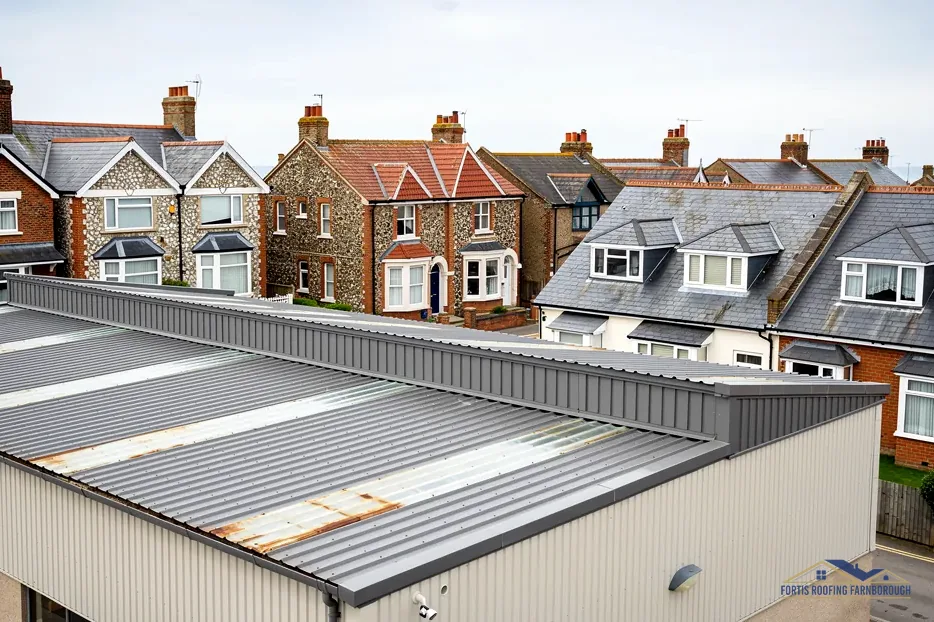
Rooflights are the weak point of many sheet roofs. For polycarbonate roofing, HomeBuilding says "They have a typical lifespan of 10 years", and The Eco Experts give "about 10 to 15 years". Plastic rooflights yellow and become brittle under sunlight, so they are often renewed before the sheets around them.
Fixings, sealants and flashings have their own lives. A roof with sound sheets may leak at tired seals, and the repair is cheap compared with replacement.
What maintenance changes
The gap between the bottom and top of a range is largely a matter of care. Roofs that are inspected and maintained last longer than those that are left, and the work involved is small.
Regular tasks include:
- clearing outlets, gutters and gullies of leaves and debris before autumn and after storms;
- checking laps, seams, flashings and sealants, and repairing small splits before water gets in;
- removing standing water causes, such as blocked drainage or lost falls;
- keeping foot traffic to marked routes, and protecting the surface where plant needs servicing;
- recording what was found, so changes can be spotted over time.
A planned programme turns these into routine. Our guide to a commercial roof maintenance plan sets out the typical content.
Poor drainage is the commonest early killer of flat roofs, because ponded water speeds the ageing of any membrane. Foot traffic, plant installations and unauthorised penetrations are the other main causes of avoidable damage, since each creates a point where the covering can fail.
The point for an owner is that maintenance is cheaper than early replacement, and it also gives a record to use in budgeting.
A range is not a promise
A published lifespan is a typical figure for a material in ordinary use. It is not a prediction for your roof, and it is not a guarantee. Marley says as much about its tiles, calling the expected life no promise of longevity, and the same principle applies to every system here.
A warranty is a different instrument. It is a contract term with conditions and exclusions, and it may run for a shorter or a longer time than the roof's expected life. Do not read one as the other.
For budgeting, the practical approach is to use the range as a prompt for a condition survey. When a roof reaches the middle of its range, have it inspected. Once it nears the top, expect replacement before long and plan for it. Our guide to commercial roof condition surveys explains the report that supports that decision.
When the roof's make-up or age is a mystery, a survey identifies the system and records its state. You receive photographs and a plain account of what the findings mean. Any work that follows is priced as a single total after the survey. The commercial roofing hub lists the services.